January Baby – how to Choose Clothes for your Baby Born in January?
Dressing a January baby often raises many questions for parents. What size winter overall to choose, what to put on the baby when going outside, and how to keep them comfortably warm in cold weather? A baby born in January often needs winter clothes for several months, which is why it is worth considering the child’s growth when choosing garments.
Dressing a newborn in winter depends on the weather, the insulation of the clothes, and whether the baby is sleeping in a stroller or traveling in a car seat. Let’s look at how to choose a suitably sized winter overall, combine different clothing layers, and ensure the child’s comfort in cold weather.
Dressing a January Baby – What Size Winter Overall to Choose?
The first step is choosing the size. Given that winter clothing might be needed in our climate even until April, when making a purchase, you should consider that a January baby will be comfortable in a winter overall for three months. As it’s challenging to predict a newborn’s length and weight, even within the same family, there’s no single, universally applicable sizing rule. The most sensible approach is to base it on children’s average length and weight charts. Since we’ve already established that a January baby will need an overall for about three months, it’s worth noting that the average three-month-old is 62 cm long.
Next, there are 3 options for making your choice:
The average newborn is 51 cm long. If you want the outerwear to fit your child perfectly right from birth, we recommend size 50, and you can then gradually increase the size as the baby grows.
Choose a winter overall with fold-over cuffs in size 56, and as the child grows, also purchase gloves and booties. Lenne baby overalls feature fold-over cuffs that can be used until the child reaches the length specified for the overall. As they grow longer, gloves and booties can be added.
The third option is to choose size 62, as this provides plenty of room for dressing, and even a slightly larger newborn can enjoy the newly purchased clothes for longer. The downside of a larger overall, however, is that when coming home from the hospital, the overall might be too big, and new parents might feel that “the baby is drowning in the overall”.
Dressing a Newborn in Winter – What to Dress your Baby in?
Mothers always want their baby to be warm and are therefore very careful when dressing their child. However, perceptions of dressing babies can differ drastically, because the conditions parents create for outdoor sleeping are so varied.
Some use a lighter stroller that allows air to circulate freely, while others prefer a stroller or cover that retains warmth so effectively it could be considered hermetic. There are homes where the child sleeps on a glazed balcony, and homes where the baby dozes off for a nap to the sound of the sea breeze. All these details change the child’s dressing needs, because babies’ sensitivity to cold can also be totally different.
It’s important to simply check the child regularly to ensure they are comfortably warm and not too hot. The best way to do this is by feeling the skin in the neck fold – the skin should be warm, but not moist. There’s also no need to panic about cold hands, as this doesn’t necessarily mean anything bad immediately, but it does signal that the child needs additional warmth as soon as possible.
Although the cold and crisp air is enchanting in a typical Nordic winter, it must be enjoyed with caution. The baby has spent nine months in a cozy, warm womb and now has to start breathing in icy winter air – this requires some adjustment and adaptation. The first few days with a tiny newborn should definitely be spent indoors, and one should wait about a week before going outside during cold weather. Before adventures in nature, the baby could be acclimated by sleeping near an open window and then – if the child is of normal weight and healthy – starting with short trips outside. Initially, it is worth limiting these to 20-minute stints, and only if the outdoor temperature is not too low. In temperatures below -10 degrees, it is sensible to stay indoors with a newborn.
How to Dress a January Baby for Sleeping Outdoors in Winter?
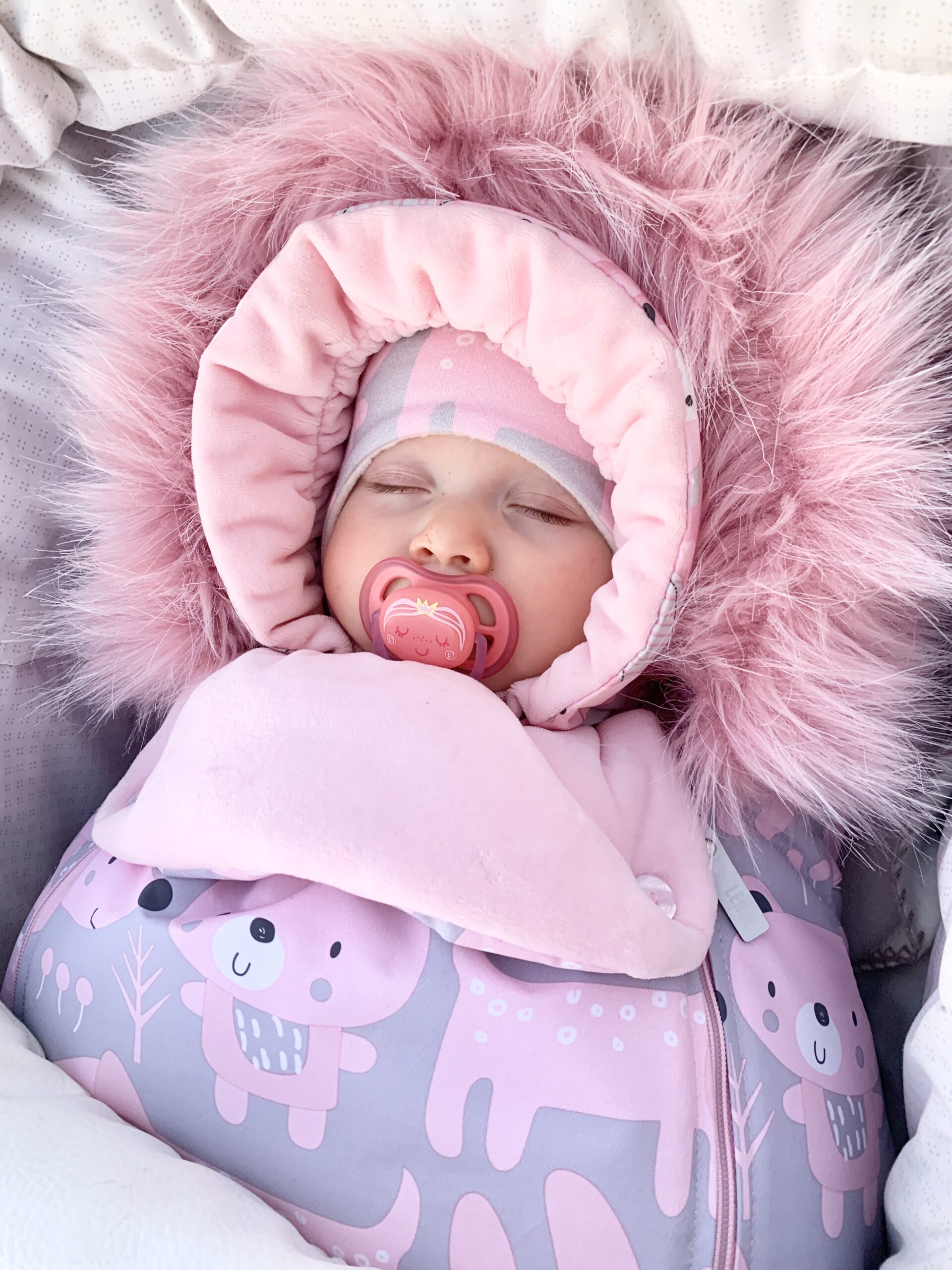
For a baby sleeping in a stroller in winter, appropriate clothing helps maintain warmth even when the child is not moving actively. At the same time, there is no need to use all possible warm layers at once.
In cold weather, clothing for sleeping outdoors can consist of the following layers:
A winter overall with insulation appropriate for the weather.
A winter footmuff if necessary.
These are possible layers, not a mandatory set for every winter day. The appropriate combination depends on the weather, the insulation of the stroller, and the child’s needs.
In milder winter weather, there can be significantly fewer layers. Kui ilm on nullilähedane või plusskraadides, ei pruugi talvekombinesooni alla meriinovillast lisakihti ega eraldi talvist soojakotti vaja minna.
When a baby is sleeping in a stroller, regularly monitor their well-being and ensure that the child’s face and airways remain clear and that there is sufficient air exchange in the stroller.
Recommended Gear for Outdoor Sleeping in Very Cold Weather
How to Dress a Baby in an Infant Car Seat in Winter?
When traveling with a car seat in winter, it is important for the baby to be warm, but at the same time, the safety harness must be correctly fastened. A thick winter overall or a puffy jacket is not suitable under the harness, as their padding can compress during an impact and leave the straps too loose.
A practical solution is to use clothing and warming accessories specifically designed for car seats. Lenne valikust leiab selleks mitu võimalust:
Lenne bunting bags – models with harness openings allow the straps to be fastened close to the child’s body and the warming top part to be placed over the child. In the car, the bunting bag can be opened if necessary so the child does not get too hot.
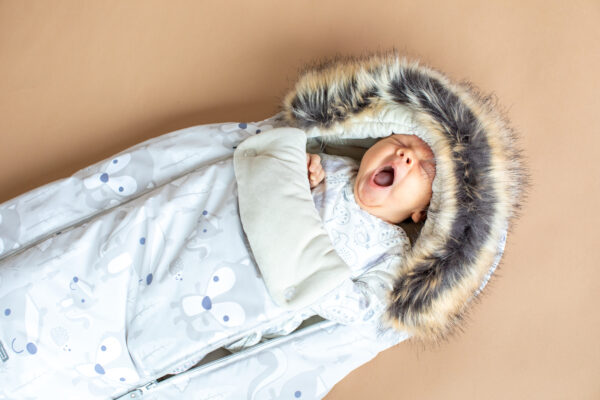
Lenne footmuffs – models with harness openings help protect the child from the cold when moving from the maternity hospital or home to the car. In a warm car, the footmuff zipper can be easily opened.
Thinner spring-autumn overalls ormerino wool overalls – suitable if the clothing is not too thick under the harness. Extra warmth can be provided with a baby blanket with harness openings, where the warming part can be wrapped around the child.
A cotton bodysuit and trousers are suitable as a base layer, along with a merino wool set if necessary. A hat can be added for the outdoors and removed in a warm car.
Important: the presence of harness openings does not automatically mean the product is compatible with every car seat. Always follow the car seat manufacturer’s instructions. No thick or compressible material should remain behind the child’s back or under the harness. Use an accessory with harness openings only if its compatibility with the specific car seat has been confirmed.
What to Dress a Newborn in When Going Home from the Maternity Hospital in Winter?
A January baby’s first trip home is a special moment for which clothes should be prepared before the birth. The most important thing is to protect the newborn from the cold and wind when moving from the maternity hospital to the car, but also to consider that in a warm car, the child needs less insulation than outdoors.
For example, the following clothes are suitable for the winter trip home:
A warm baby hat that protects the child’s head and ears outdoors.
A winter footmuff appropriate for the weather or a suitable bunting bag with harness openings for moving to the car.
When using a car seat, the same safety requirements apply as for any other car journey. The straps must be tight against the child’s body, and warming outer layers must be used according to the car seat manufacturer’s instructions.
Once you reach the warm car, open the footmuff or the top of the overall and remove the hat if necessary. This helps avoid a situation where the child gets too hot in the car.
What to remember when dressing a January baby?
Dressing a January baby does not have to be complicated. The most important thing is to choose clothing layers appropriate for the weather and monitor the child’s well-being. Clothing needs may differ when sleeping in a stroller, riding in a car, or moving outdoors.
Start with comfortable undergarments, add a merino wool layer as needed, and choose outerwear based on how cold and windy it is outside. This way, a January baby can enjoy their first winter comfortably warm and safe.







Kommentaarid