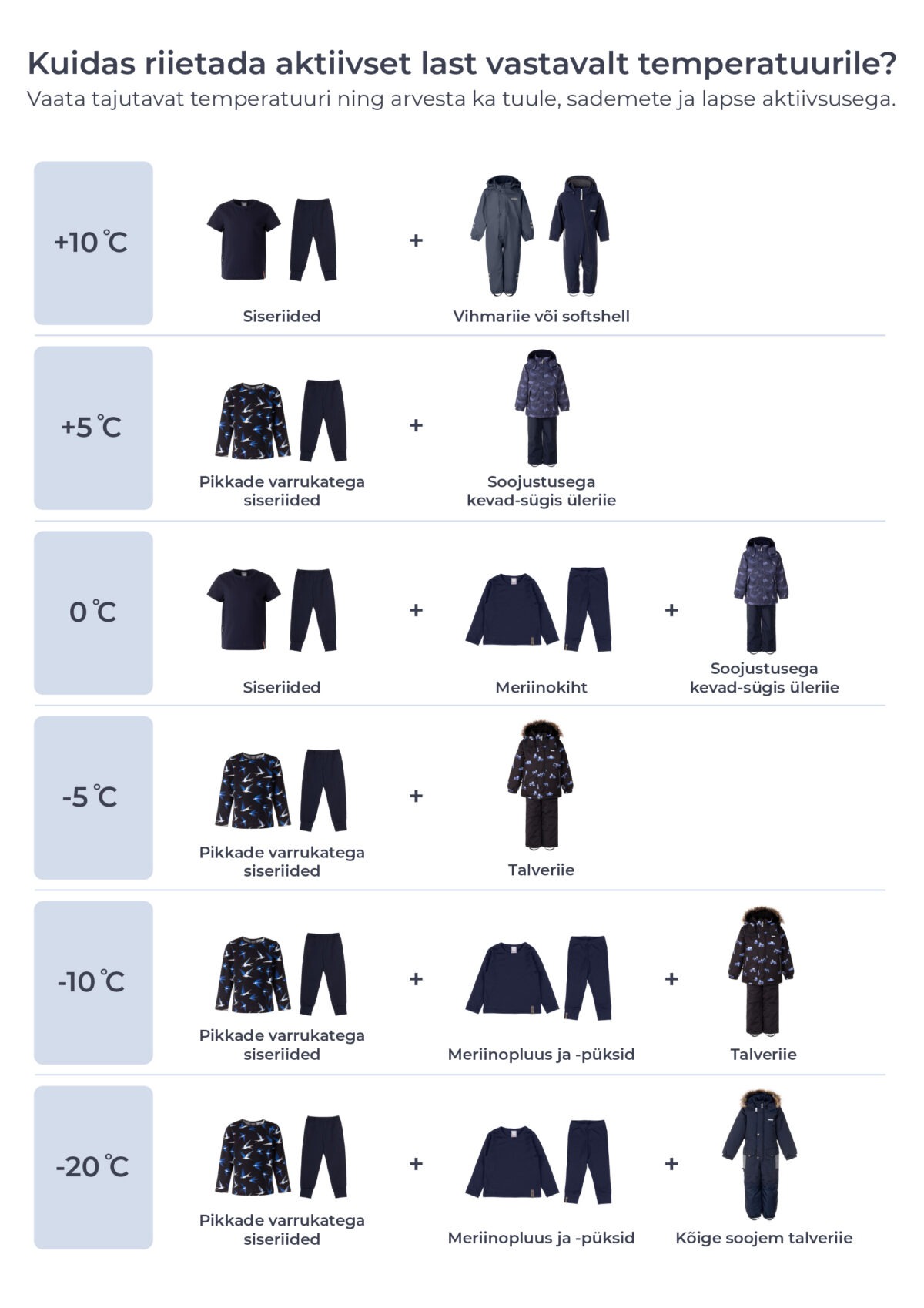
How to dress a child according to the weather so they are comfortable and warm enough outdoors? Dressing a child according to the temperature depends not only on the thermometer reading but also on wind, precipitation, and the child’s activity level. In this guide, we look at which clothes are suitable for +10, +5, 0, -5, -10, and -20 degrees and how to combine different layers of clothing.
The same +5 °C can be quite pleasant in sunny and calm weather, but feel much colder with strong wind and rain. Likewise, a child who runs and plays a lot usually needs fewer insulating layers than a child sitting in a stroller or moving calmly.
The easiest way to think about it is this: first choose comfortable clothes for the child, add a warm mid-layer in colder weather if necessary, and put a weather-protective jacket and trousers or a jumpsuit on top.
The recommendations below are primarily intended for an active child moving outdoors, at kindergarten, or on the way to school. The practical suggestions in the article have been reviewed by a former kindergarten teacher and mother of four.
How to dress a child according to weather and temperature? A quick overview
These are not rigid rules. A child’s clothing always depends on their age, activity, and how long they stay outdoors. The water resistance and wind resistance of the outerwear, as well as the warmth of the accessories, are equally important.
How to dress a child for +10 degrees?
At around +10 °C, it is important to protect the child from wind and rain. For an active child, the following are usually suitable:
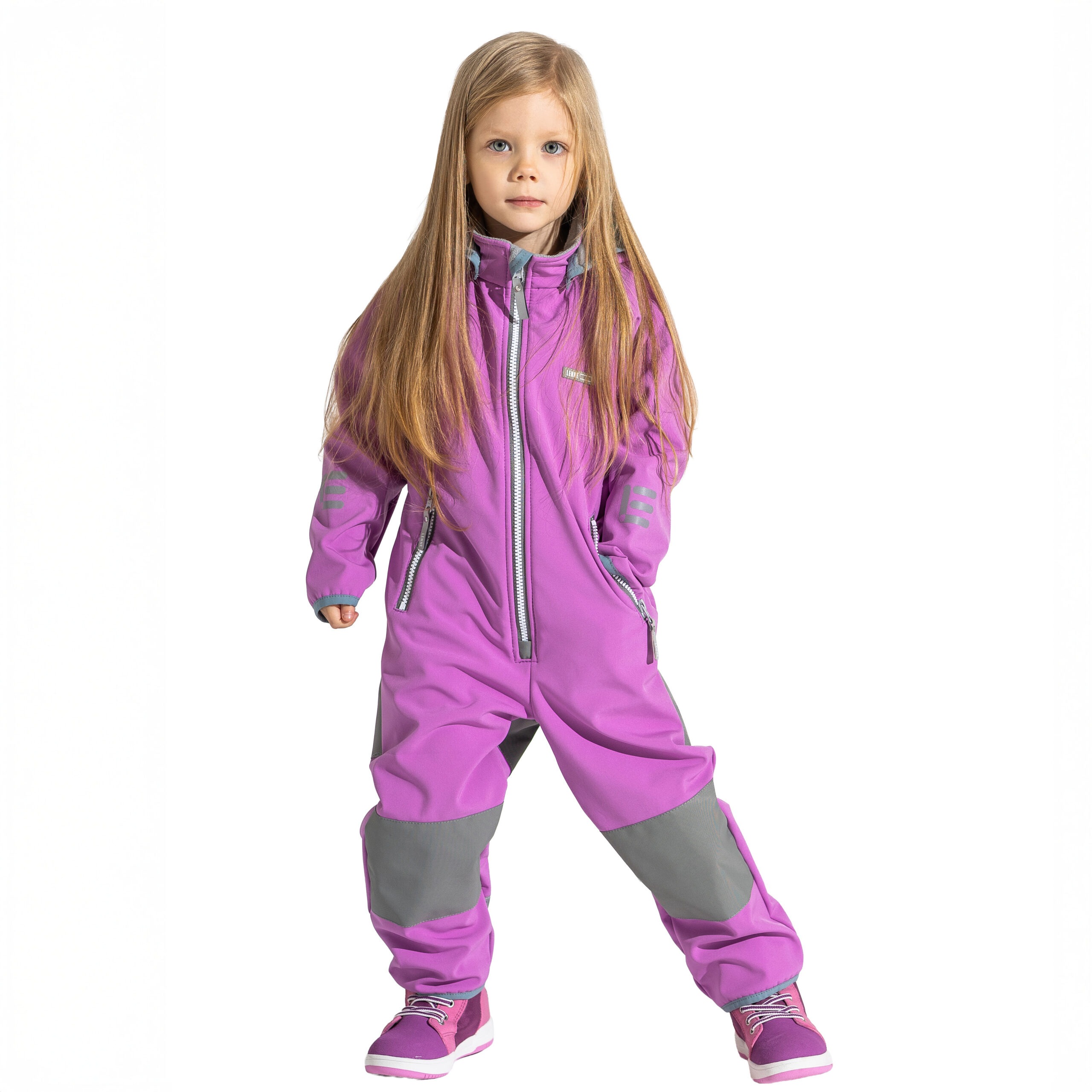
Softshell or rainwear – which one to choose for the child?
Softshell is best suited for active outdoor movement, while rainwear is for heavy rain and playing with water and mud. Both protect against wind and rain but differ in breathability, material, and comfort of use.
When to choose softshell clothing for a child?
Lenne softshell is highly waterproof, windproof, and breathable. The fabric’s water resistance is 10,000 mm and breathability is 10,000 g/m²/24 h. This means that softshell protects the child well from rain and wind while allowing body moisture to escape. Therefore, it is particularly suitable for kindergarten, the playground, walks, and other active movement in spring and autumn.
Softshell with merino lining is a thinner fabric, but also with 10,000 mm water resistance and 10,000 g/m²/24 h breathability. The natural merino lining helps keep warm, and thicker sweatpants fit comfortably under the thinner fabric.
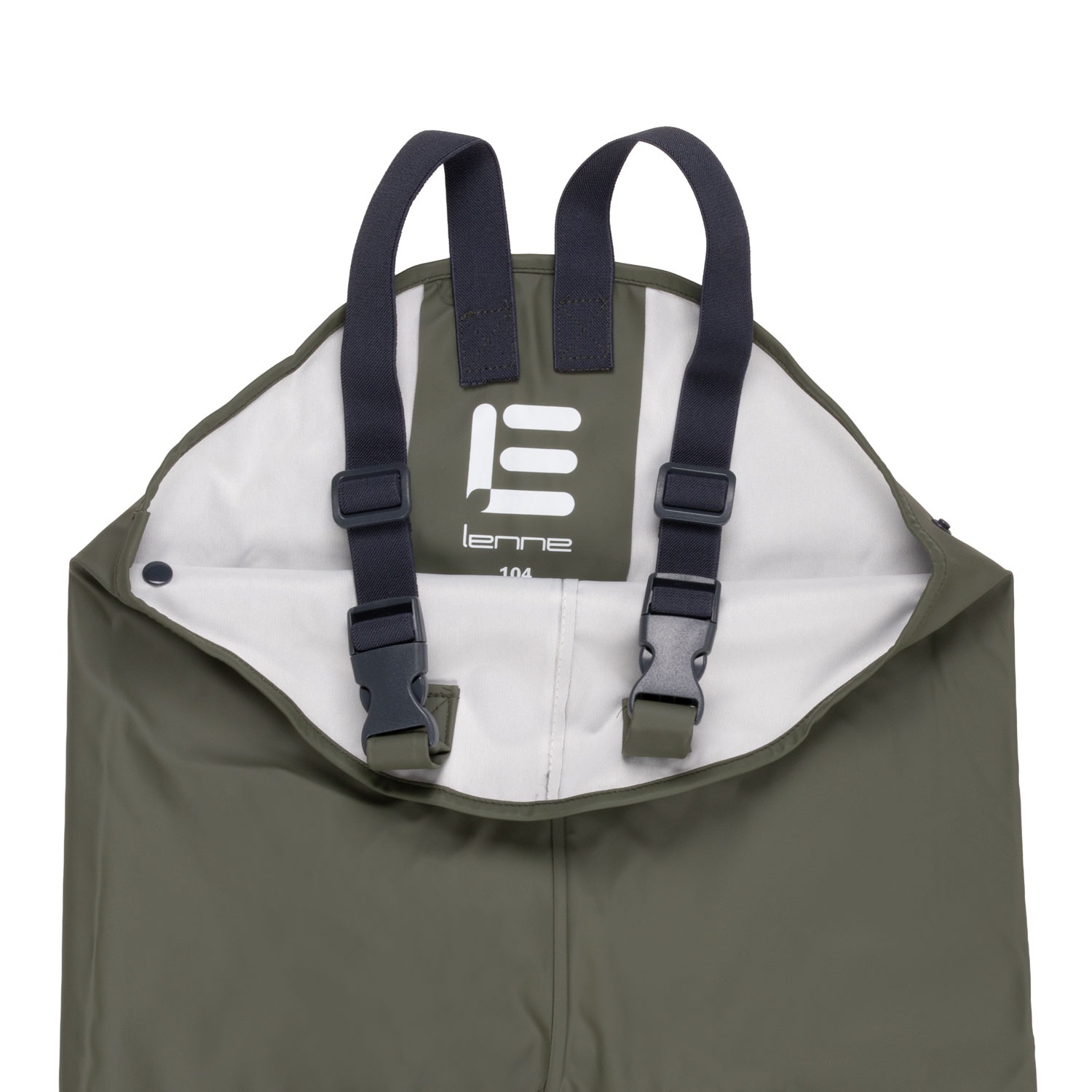
When to choose rainwear for a child?
Rainwear is the best choice for heavy rain, puddles, and playing on wet ground. Lenne rainwear is made of material with a fully waterproof polyurethane coating, and their welded seams prevent water from entering even during prolonged contact with water.
Unlike breathable softshell, such rainwear lets less body moisture out but offers more reliable protection in situations where the child sits on wet sand, kneels in mud, or plays in puddles.
In addition to thin rainwear, Lenne also offers warm-lined rain jumpsuits, which have built-in quilted wadding insulation. These combine the full water protection of rainwear with an insulating mid-layer and are suitable for cold and wet weather.
In summary: choose softshell if the child moves a lot and you need breathable but waterproof clothing. Choose rainwear if the child is in contact with water, mud, or wet ground for a long time. For cooler weather, both standard softshell and insulated rainwear are available.
Which hat is suitable for +10 degrees?
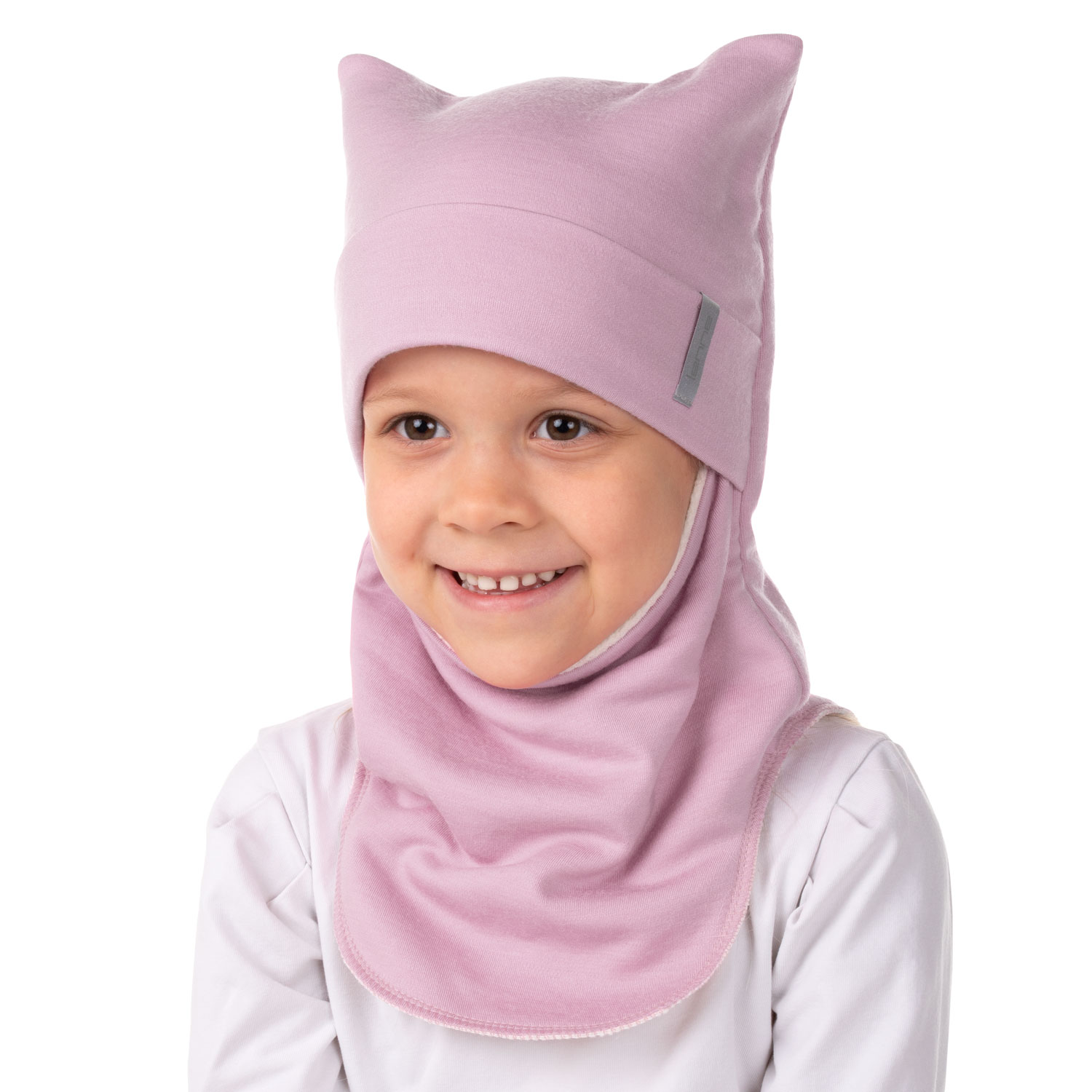
In warmer autumn weather, a thinner hat or a spring-autumn balaclava is usually sufficient. A balaclava is practical in kindergarten because it covers the head, ears, and neck all at once and does not shift out of place so easily while playing.
+5 °C is a typical autumn transition temperature, where suitable clothing is largely determined by wind and humidity. When thinking about how to dress a child according to the weather, always consider wind, precipitation, and the child’s activity level. For an active child, the following may be suitable:
a long-sleeved shirt and long trousers or leggings;
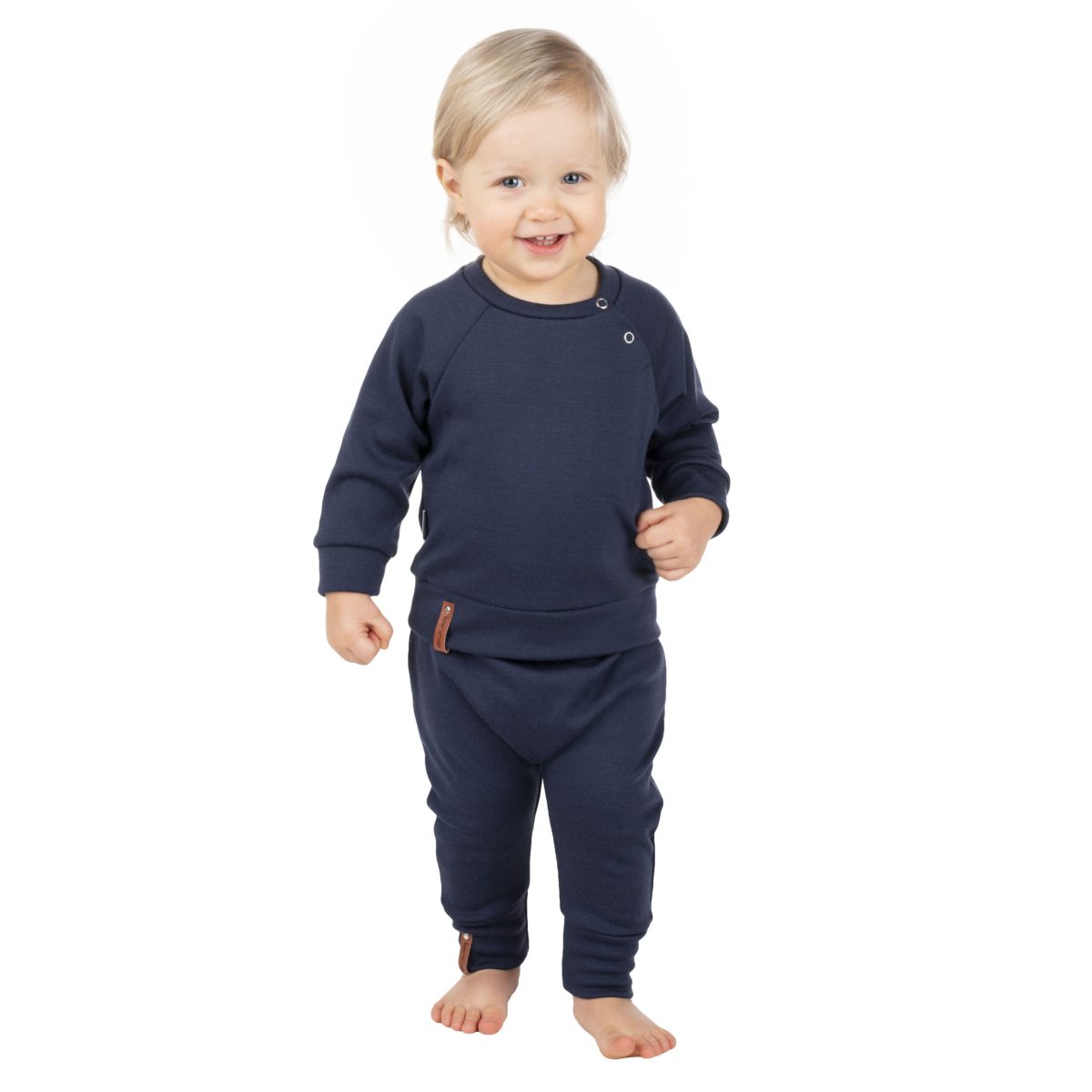
If the weather is damp or very windy, amerino wool blouse and trousers can be put over or against the skin instead of a cotton shirt and trousers.
Which balaclava is suitable for +5 degrees?
At +5 °C, the thickest winter balaclava is usually not necessary. In warmer and drier autumn weather, a spring-autumn balaclava is suitable. In colder, damper, and windier weather, an autumn-winter balaclava with merino wool lining can be chosen. Lenne’s range includes balaclavas of various thicknesses, allowing the hat to be chosen not only by season but also by the specific weather.
Around 0 °C is one of the most difficult temperatures for dressing a child. Zero degrees can mean dry cold, but just as easily sleet, wet snow, mud, and icy wind.
At temperatures near zero, the wind and water resistance of the outerwear becomes particularly important. A child does not necessarily have to stand in the rain to get wet. In kindergarten, kneeling on wet ground, sitting in the snow, or playing in sleet is enough.
How to dress a child for –5 degrees?
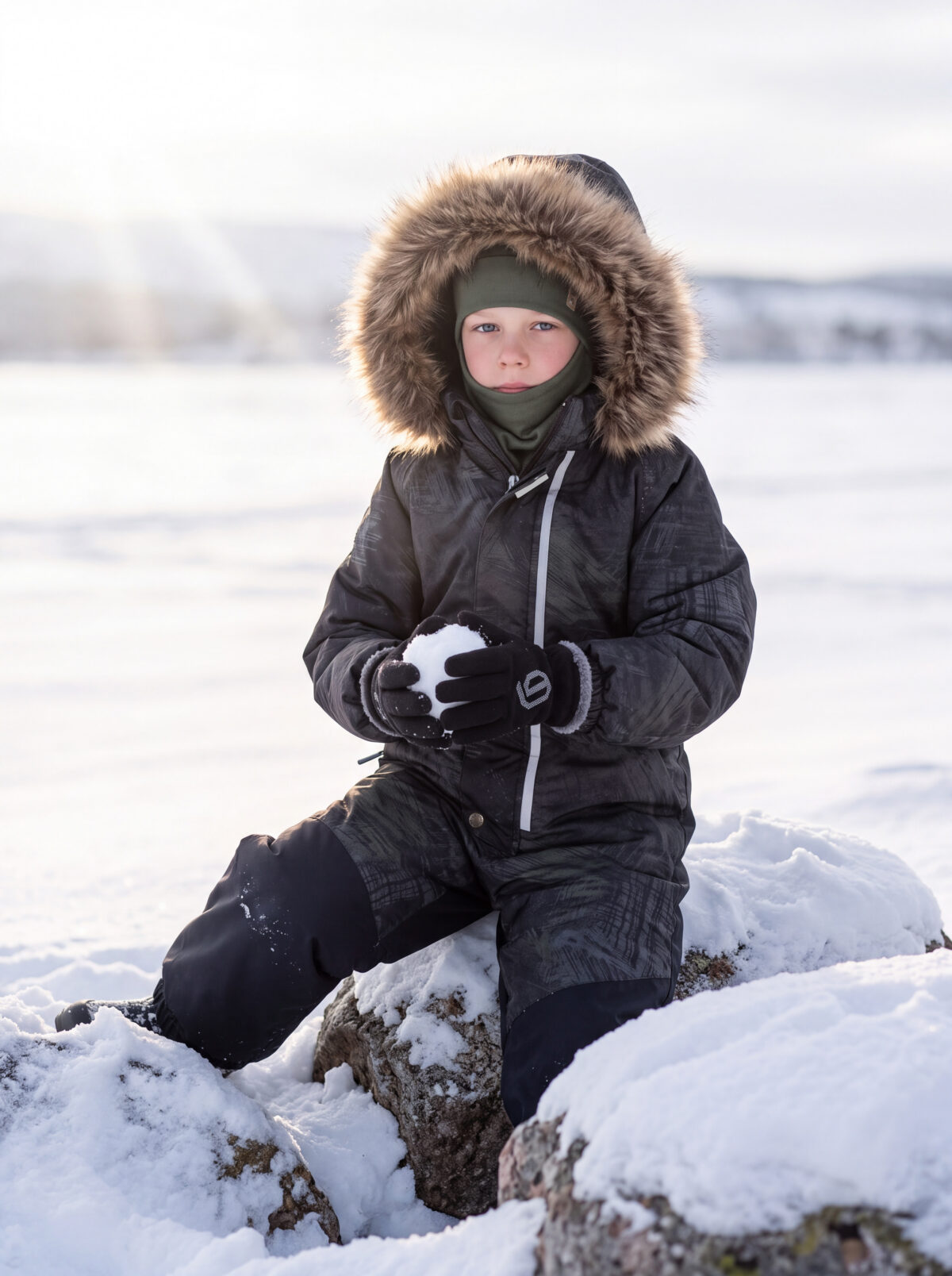
At –5 °C, it is time to wear warm winter clothes. For an active child, for example, the following are suitable:
A separate thick mid-layer is not always necessary for a very active child. If the child is constantly running, climbing, and playing, dressing too warmly can cause sweating instead. For a calmer child or for longer periods outdoors, a merino mid-layer can be added.
How to dress a child for –10 degrees?
At –10 °C, it is worth consciously using layered clothing.
An air temperature of –10 °C does not always mean the child experiences the weather as –10 degrees. With strong wind, the perceived temperature can be significantly lower.
Which balaclava is suitable for –10 degrees?
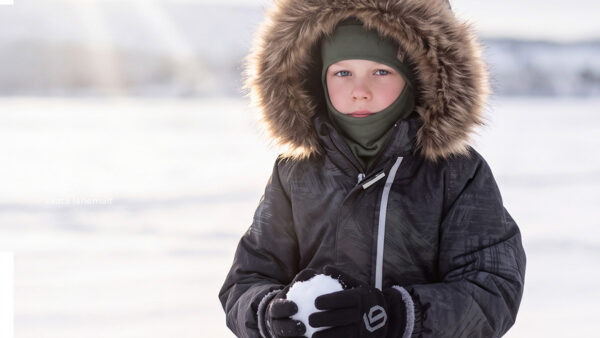
At around –10 °C, it is worth preferring a very warm winter balaclava. Thinner autumn and transition season balaclavas may no longer provide enough protection in strong wind and cold.
For a colder winter, a thicker merino wool balaclava is suitable, covering the head, ears, forehead, cheeks, and neck well. Lenne’s warmest merino wool balaclavas are designed for winter use with a perceived temperature of approximately 0 to –25 °C.
Their warmth is enhanced by:
300 g/m² merino fabric;
dense weave structure;
soft cotton fleece lining;
multi-layer construction;
good coverage of the forehead, ears, cheeks, and neck;
the ability to raise the collar part higher in front of the face in colder weather.
Merino wool helps retain warmth while remaining breathable. On the coldest days, be sure to look at the perceived temperature or feels like reading in addition to the air temperature, as wind can make the weather significantly colder.
At –20 °C, a child needs very warm, weatherproof outerwear and well-thought-out layered clothing. It is equally important to ensure that the hat, gloves, socks, and winter boots are suitable for cold weather.
suitable winter boots and wool socks if necessary.
It is important that the jumpsuit or winter set does not become too tight around the body with additional layers. The air between the layers helps retain warmth, so it is not good if the clothes are tightly compressed when put on top of each other. The child must also have enough room to move. In cold and windy weather, it is worth using a hood. A waterproof and windproof hood provides additional protection for the hat and helps reduce heat loss from the head and neck area.
The same principle applies to winter footwear. A boot that is too tight can make the foot colder because the toes do not have enough room to move and there is less room for warm air. If necessary, a warm sock should fit into the boot without the footwear being tight.
In very cold weather, the entire outfit must function as a whole
–at –20 or even down to –30 °C, a very warm jumpsuit alone is not enough. If, for example, gloves or footwear no longer keep enough warmth, the child may feel cold even if the outerwear itself is very warm.
It is also worth reviewing previously used winter clothes and footwear. A product used by a second or third child may be perfectly fine, but after long use, the insulation may have collapsed or worn in places, so it may no longer retain warmth as evenly as when new. The same applies to the lining of boots.
Therefore, before the arrival of very cold weather, it is worth checking:
whether the clothes and footwear have become too small for the child.
whether the insulation of the outerwear feels even;
whether the lining of the gloves is intact and dry;
whether the lining of the winter boots is still fluffy and warm;
Monitor the child while outdoors as well
Even with well-chosen winter clothing, the child’s well-being must be monitored in very cold weather. An actively moving child stays warm better than a child who stands or sits still for a long time. If the child becomes lethargic, complains of being cold, or fingers and toes start to feel uncomfortably cold, you should go into the warm.
In extreme cold, the goal is not to put as many clothes as possible on the child, but to choose sufficiently warm outerwear, suitable layers, and warm accessories, and to ensure that the child can move freely and stays dry.
Frequently asked questions about dressing a child
How to dress a child according to the temperature?
When dressing a child, air temperature, perceived temperature (wind chill), precipitation, and the child’s activity must be considered. At +10 °C, thinner weatherproof clothes are often sufficient; around 0 °C, insulation and wind and water resistance become important. In –10 °C and colder weather, it is worth using warm winter clothes and a merino wool mid-layer if necessary. Knowing how to dress a child according to the weather makes it easier to choose suitable layers for both cold winter days and warmer weather.
What to put on a child at +10 degrees?
At +10 °C, a T-shirt, thin trousers, and softshell clothing protecting against wind and rain are suitable for an active child. For playing in heavy rain and mud, waterproof rainwear is more practical. A thin hat or a spring-autumn balaclava is usually sufficient for headwear.
How to dress a child for +5 degrees?
At +5 °C, a long-sleeved shirt, long trousers, and an insulated spring-autumn jumpsuit or jacket and trousers are suitable for the child. In addition, an autumn balaclava and thin gloves could be used. In windy or damp weather, a merino wool layer can be added.
Should a child wear a winter jumpsuit at 0 degrees?
At 0 °C, a child can wear either an insulated spring-autumn jumpsuit with a merino wool mid-layer or a weatherproof autumn-winter or winter jumpsuit. The choice depends on the child’s activity, wind, and humidity. In kindergarten, it is particularly important that outerwear protects against wet snow, sleet, and sitting on wet ground.
How to dress a child for –5 degrees?
At –5 °C, a warm winter jumpsuit or winter jacket and trousers, a warm balaclava, winter gloves, and winter boots are suitable for the child. An actively playing child may not need a thick mid-layer, but for calmer activities or longer periods outdoors, merino wool clothing can be added.
What to put on a child at –10 degrees?
At –10 °C, long-sleeved indoor clothes, a merino wool blouse and trousers, and a warm winter jumpsuit or winter set are suitable for the child. Additionally, a warm merino wool balaclava, winter gloves, and warm-lined winter boots are necessary. With strong wind, it must be considered that the perceived temperature can be significantly lower than the air temperature.
How to dress a child for –20 degrees?
At –20 °C, the warmest weatherproof winter jumpsuit or winter set, a merino wool additional layer, and very warm gloves, hat, and winter boots should be chosen. It is important that the clothes are not too tight and the child can move freely. In very cold weather, the child’s well-being must be monitored and, if necessary, the time spent outdoors shortened.
Is a merino wool base layer necessary for a child?
A merino wool base or mid-layer helps retain body heat while allowing the skin to breathe. It is particularly practical in cold, damp, and windy weather. An actively moving child may not always need an extra layer, but for calmer activities and colder weather, it helps increase the thermal performance of the clothing.
Which is better for a child, softshell or rainwear?
Softshell is suitable for active outdoor movement because it protects against wind and rain and allows body moisture to escape. Lenne softshell fabric has a water resistance of 10,000 mm and breathability of 10,000 g/m²/24 h. Rainwear with a polyurethane coating and welded seams is better suited for heavy rain, puddles, and playing on wet ground.
Which balaclava is suitable for a child in cold winter weather?
For cold winter weather, a thick merino wool balaclava is suitable, covering the head, ears, forehead, cheeks, and neck. Lenne’s warmest balaclavas use 300 g/m² merino fabric, cotton fleece lining, and a multi-layer construction. They are designed to be worn with a perceived temperature of approximately 0 to –25 °C.
Why must perceived temperature be considered when dressing a child?
Perceived temperature indicates how cold the weather feels to a person. For example, an air temperature of –5 °C can feel much colder with a strong wind. Therefore, when choosing outdoor clothes for a child, one should look at the perceived temperature reading in the weather forecast in addition to the thermometer, and consider precipitation and the child’s activity. Before choosing outdoor clothes for a child, it is also worth checking the short-term weather forecast. See the 4-day weather forecast and consider wind and precipitation in addition to temperature.



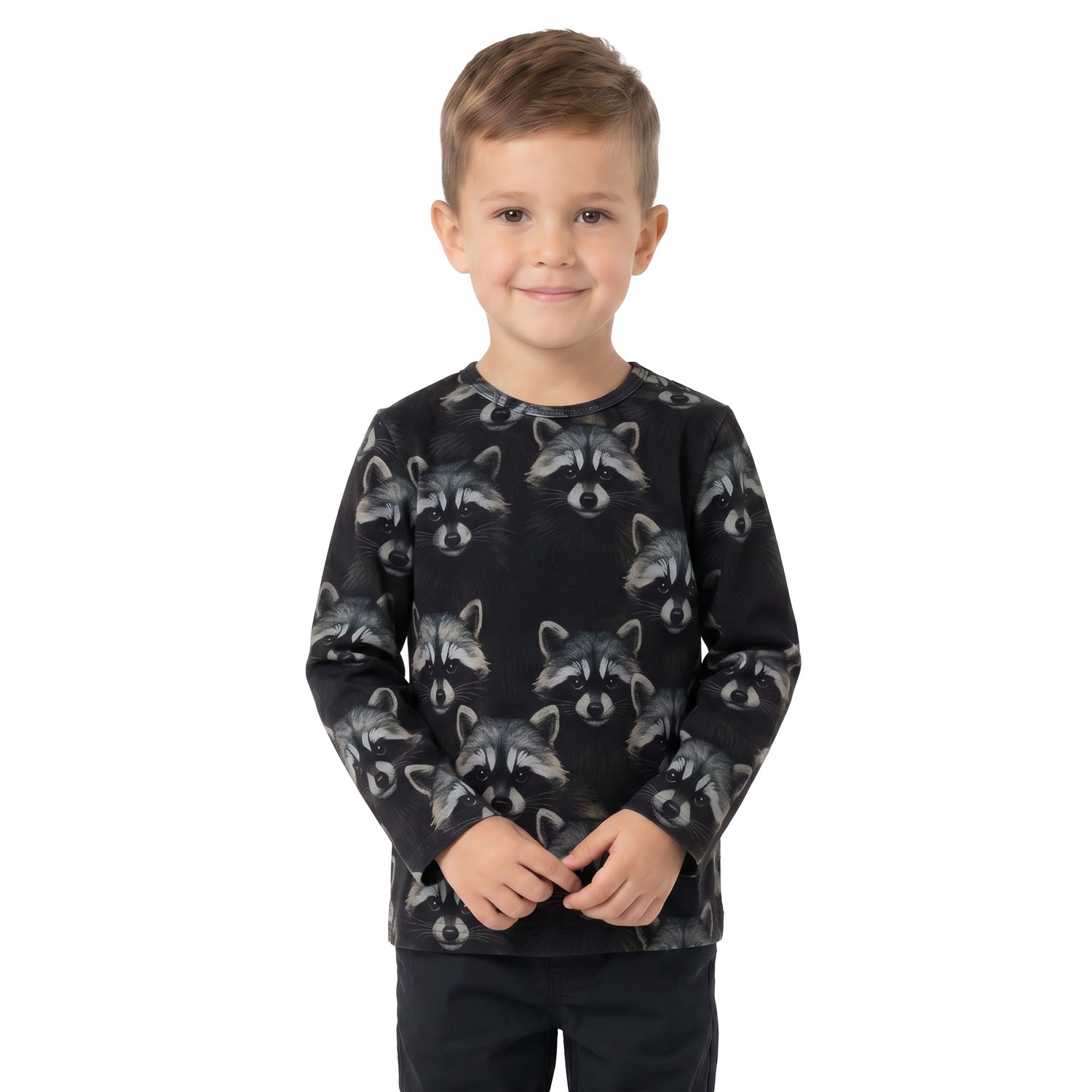
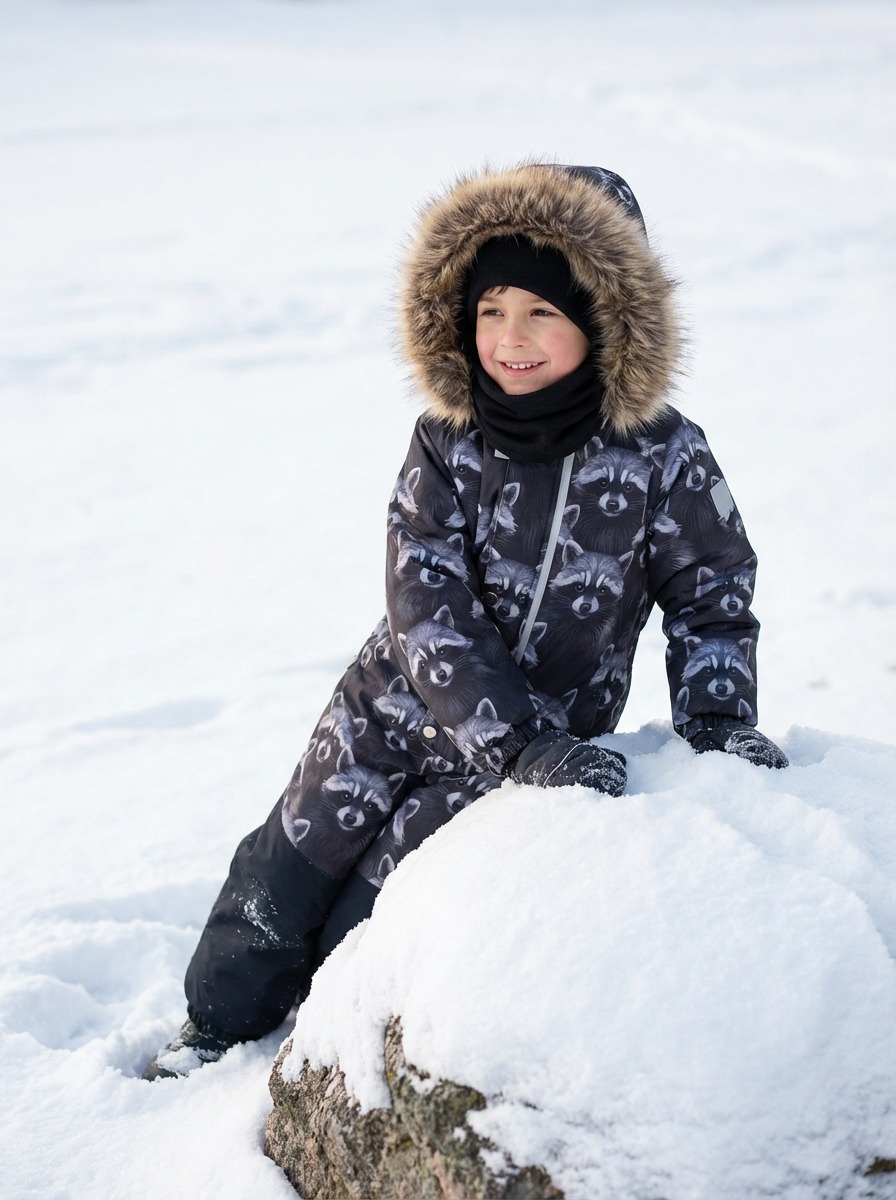
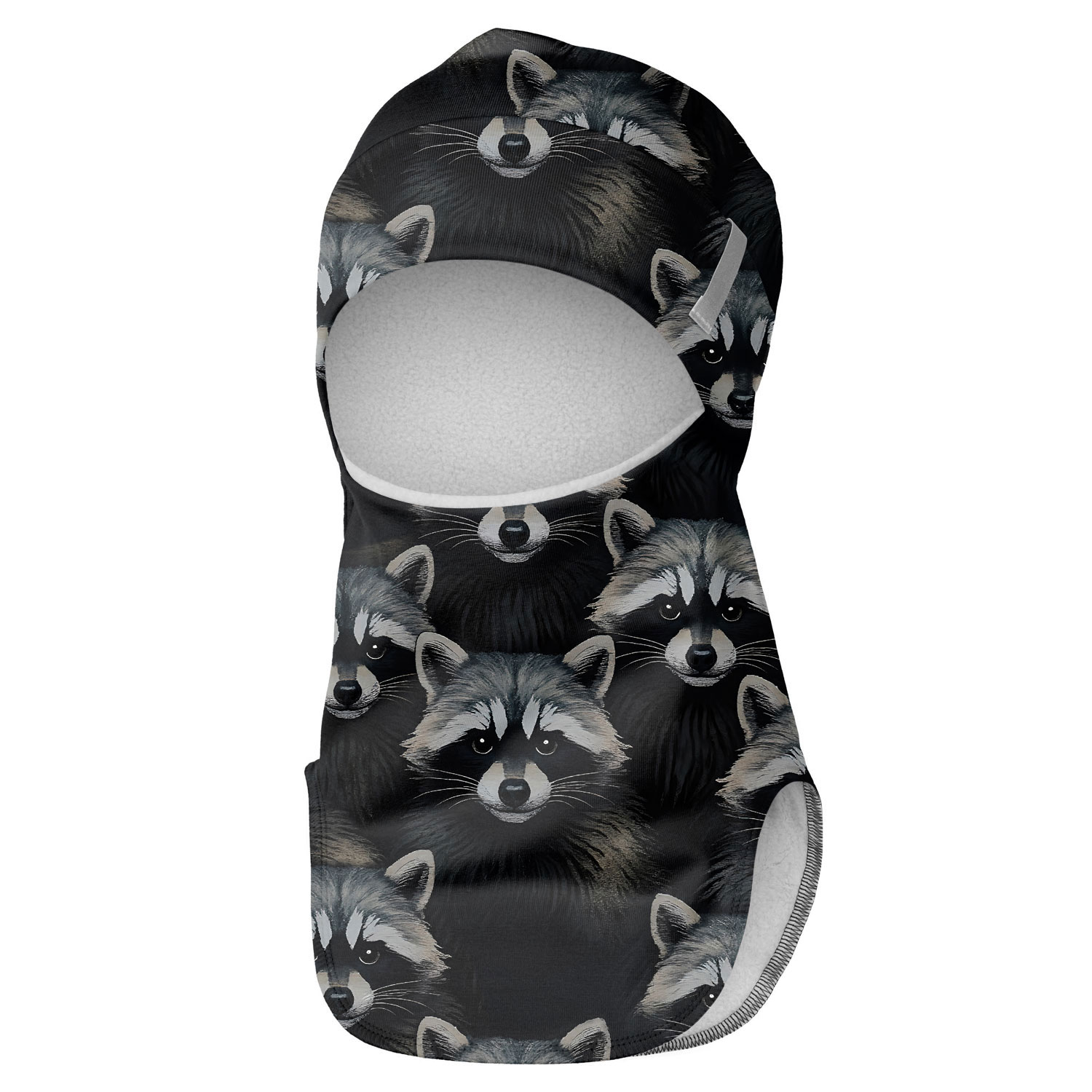
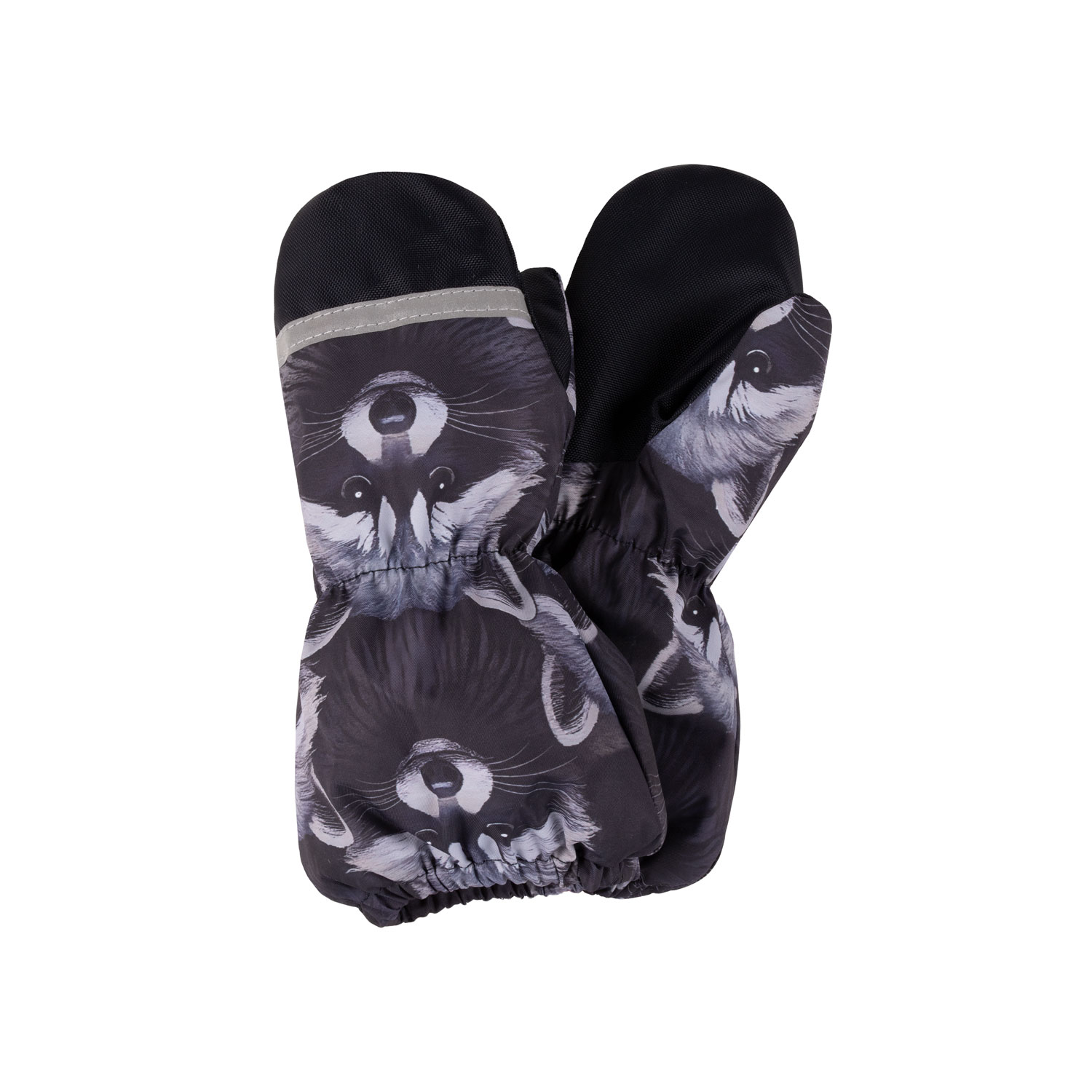
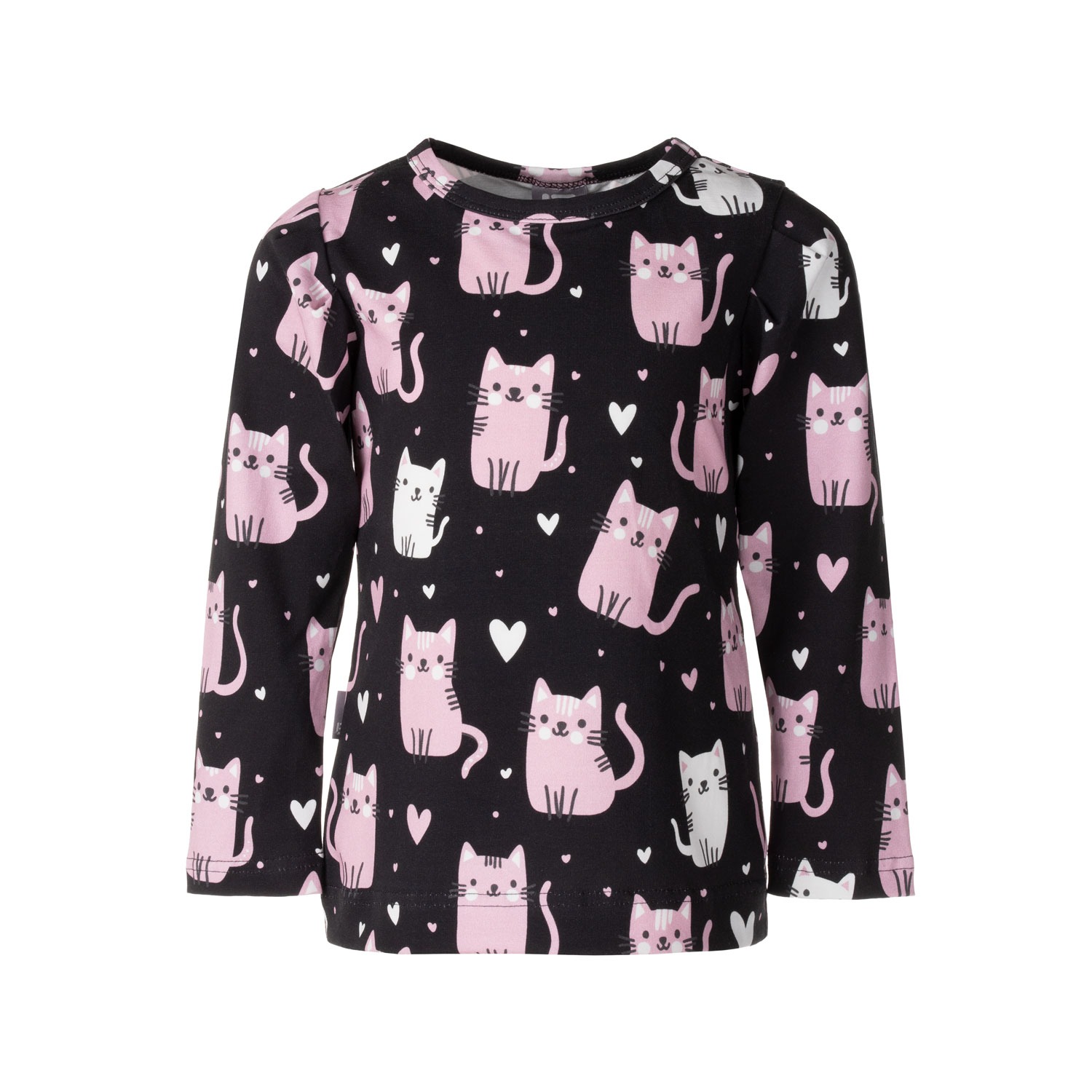
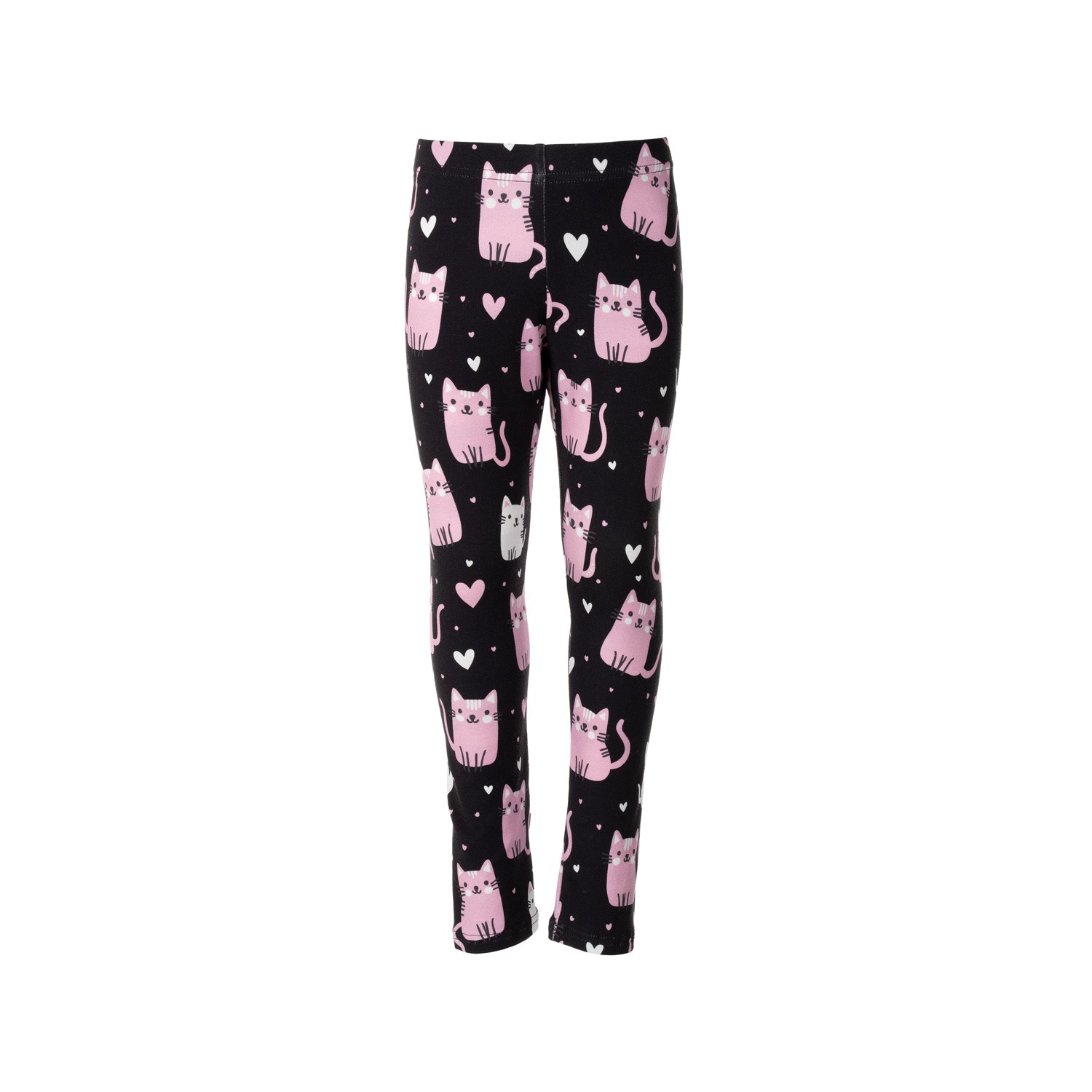 long-sleeved indoor clothes;

 merino wool blouse and trousers;
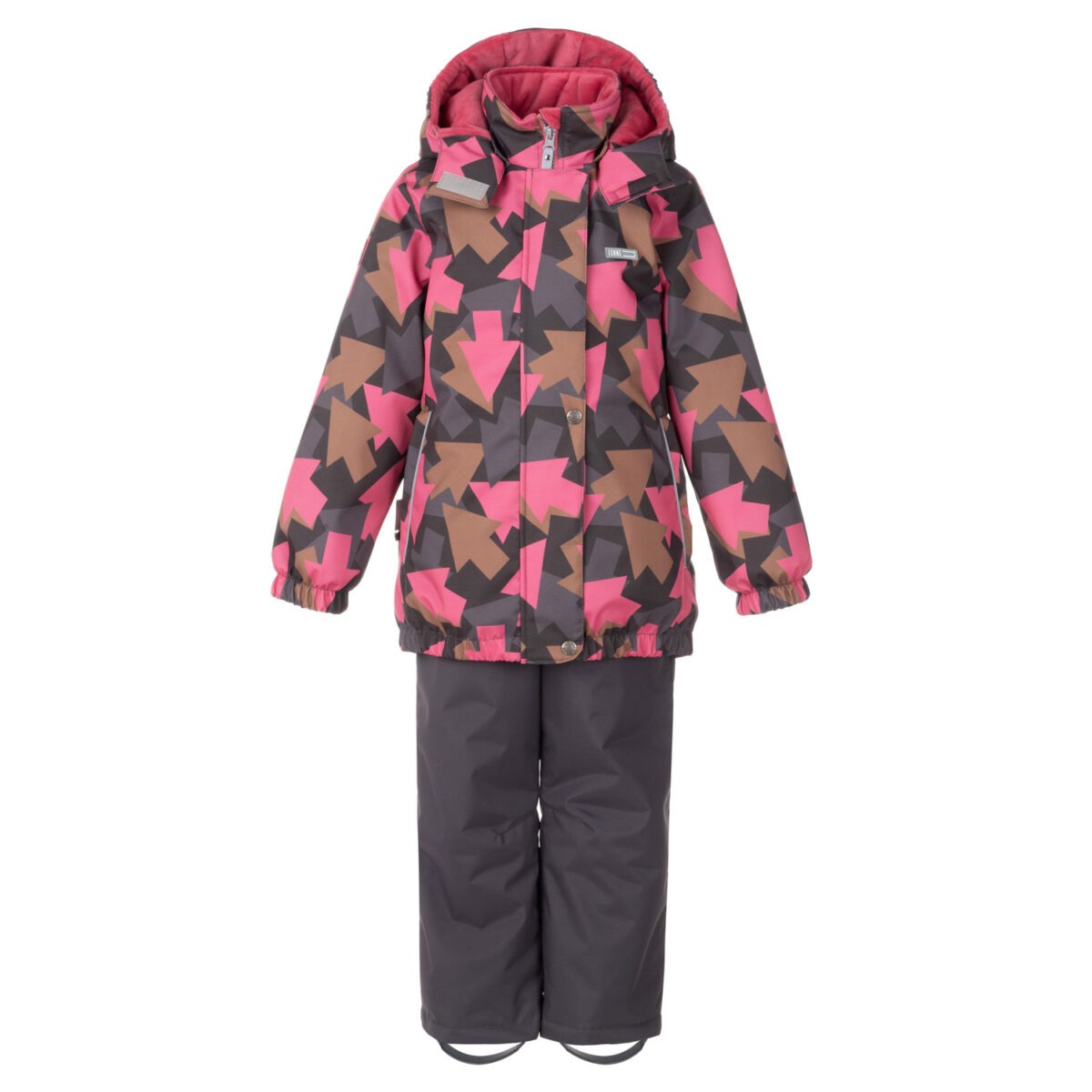
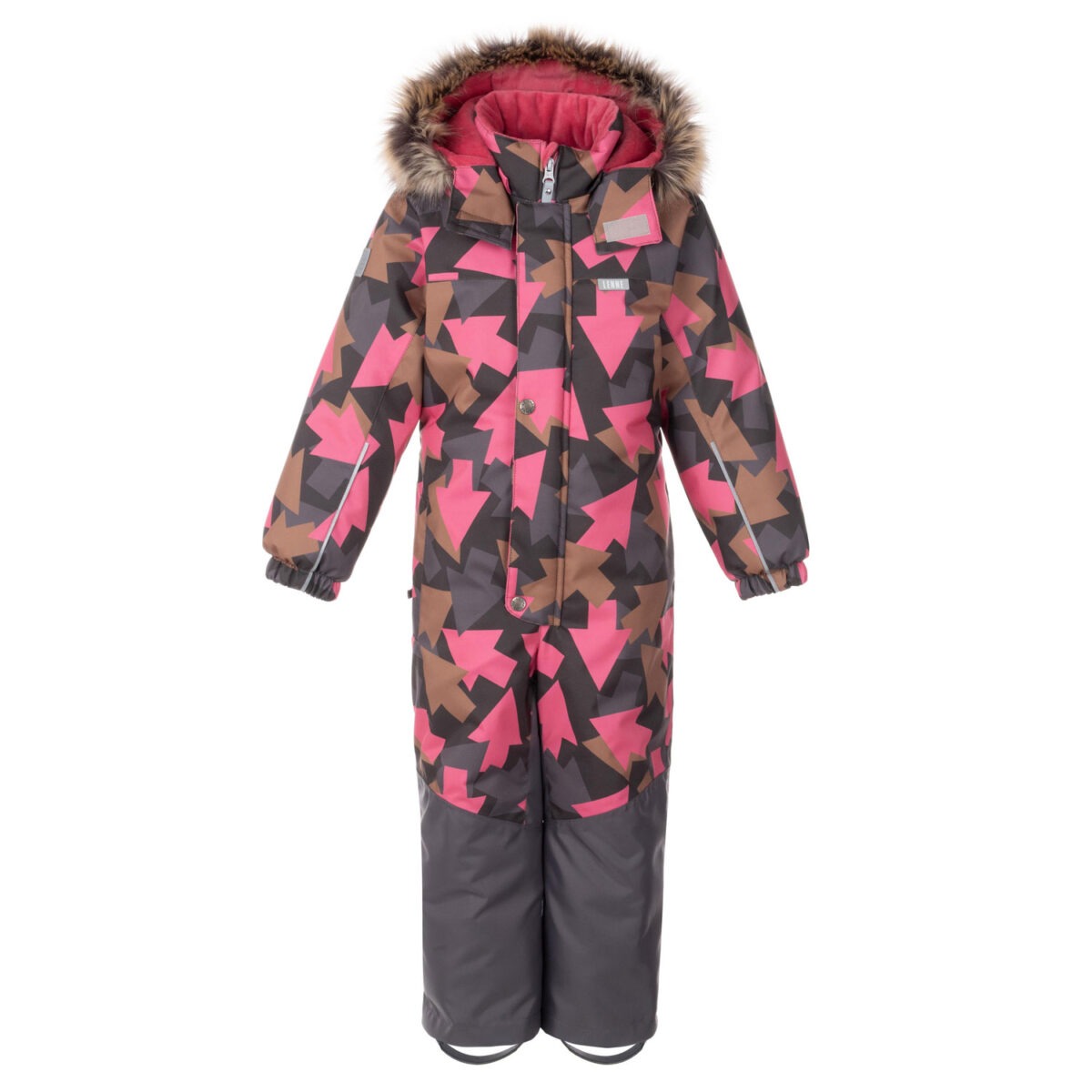
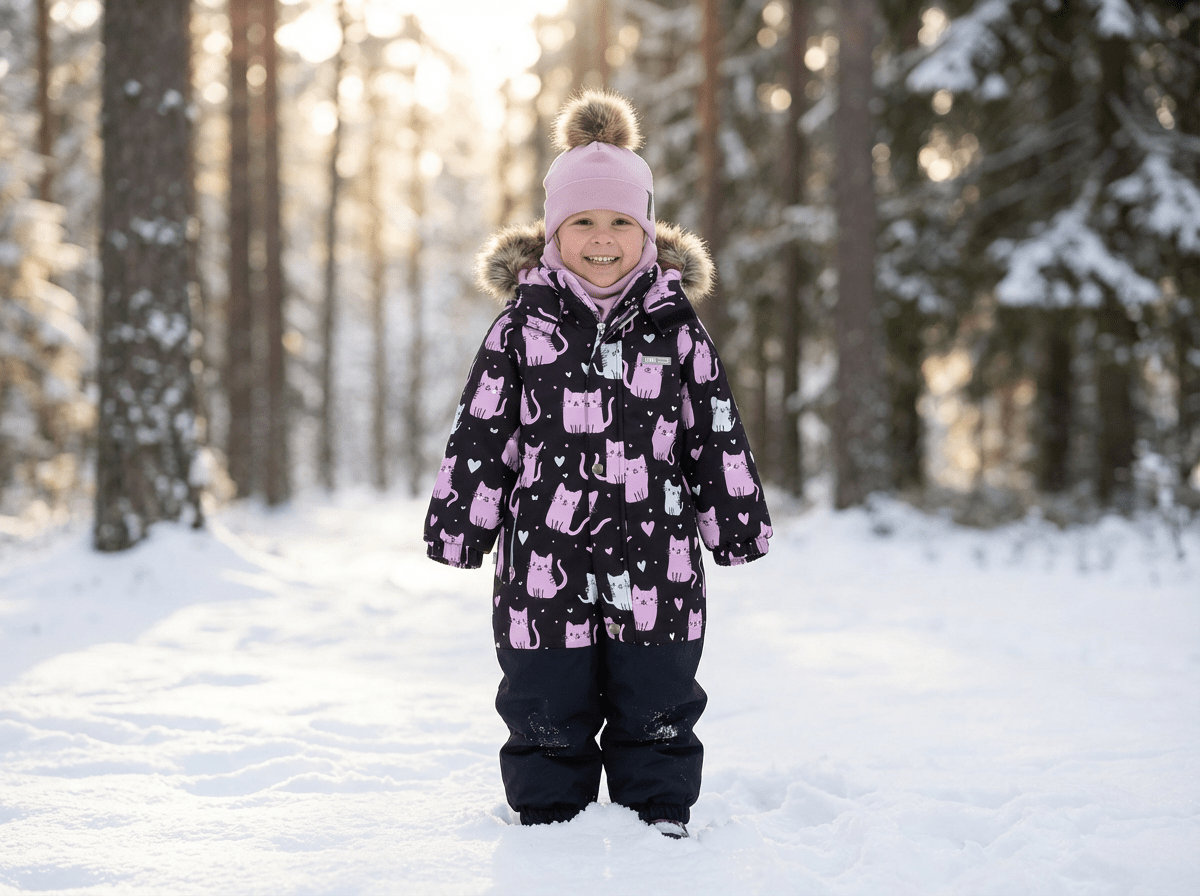 a winter jumpsuit or winter jacket and trousers;
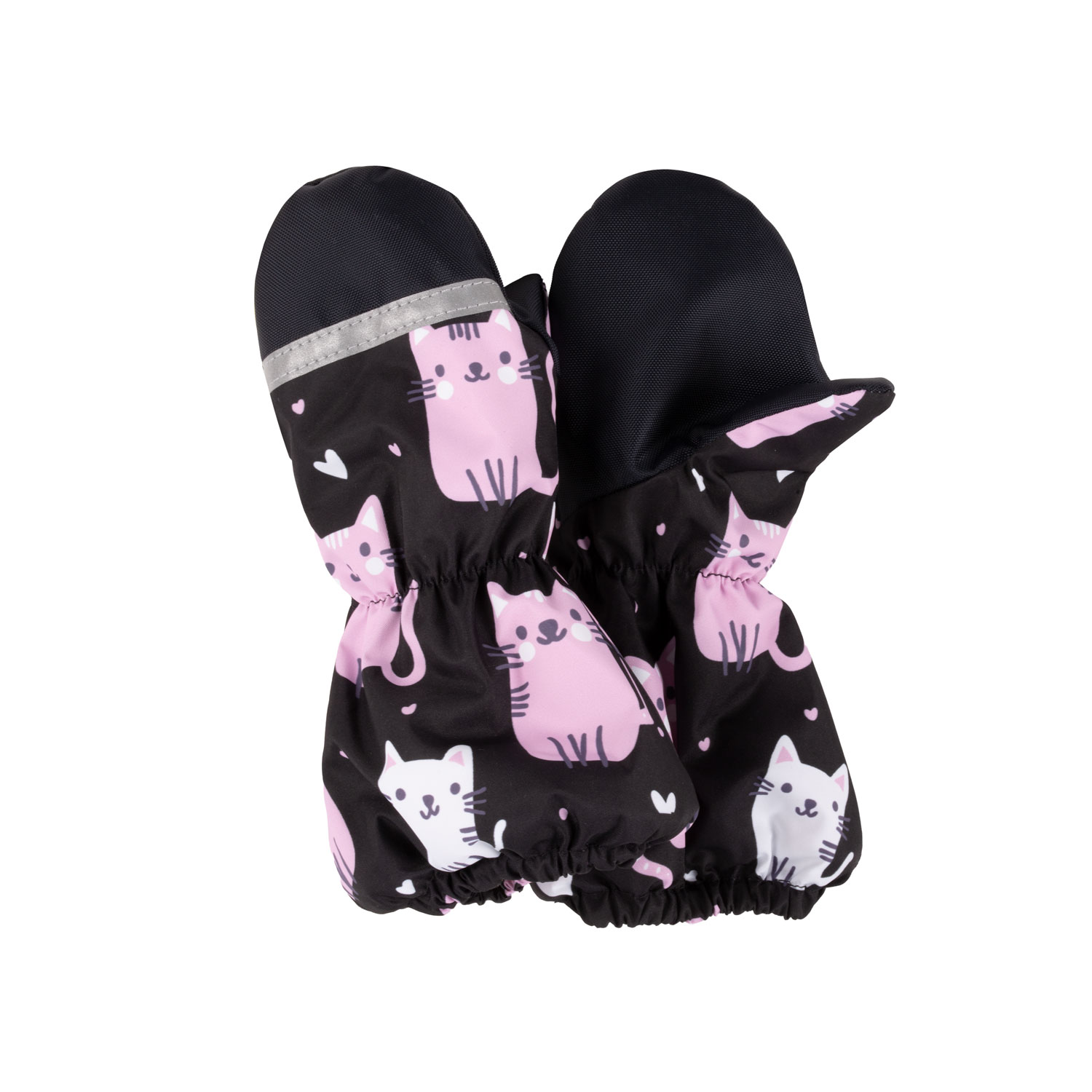 winter gloves with wool-blend fur lining;
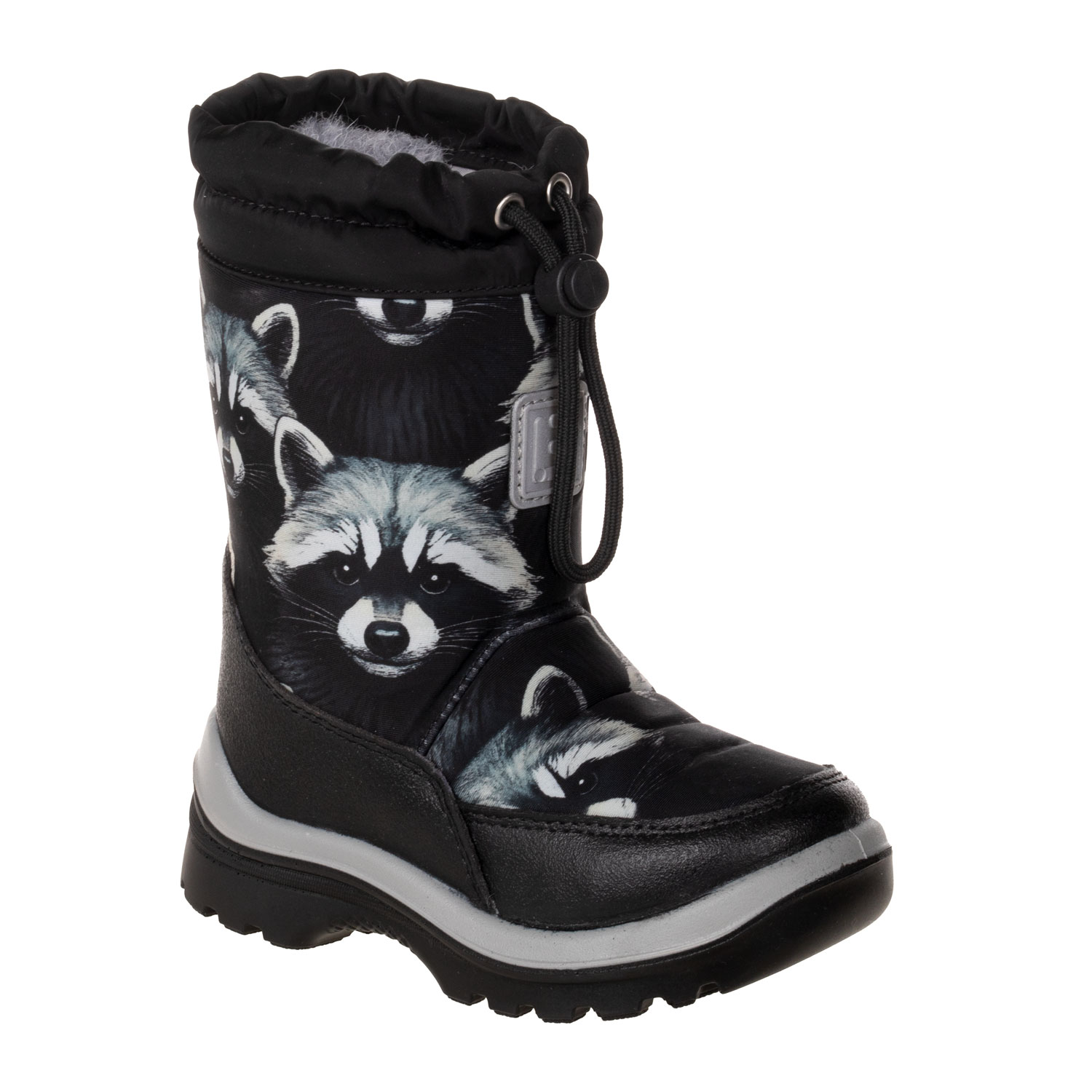
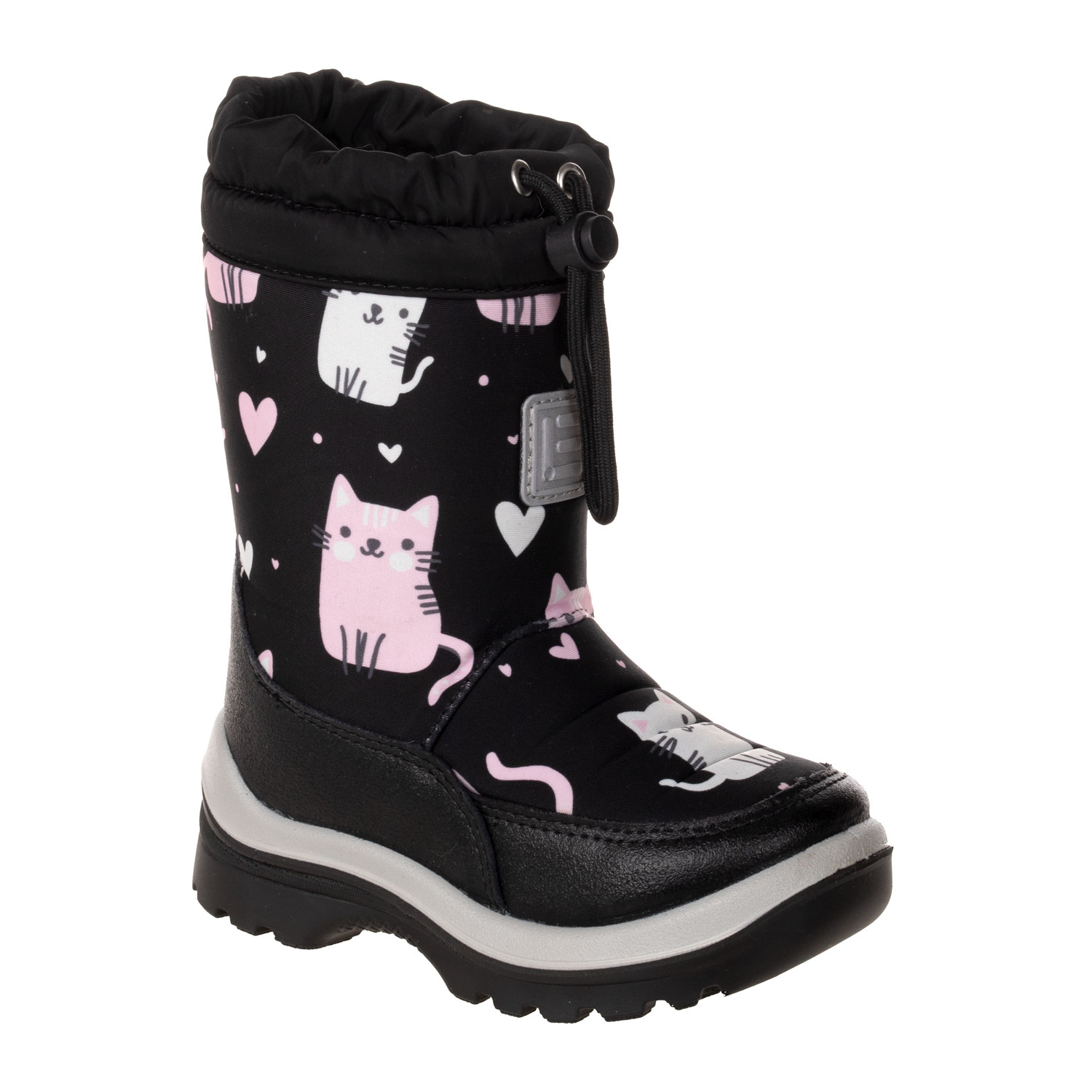 warm winter footwear with wool-blend lining.

Kommentaarid