Which balaclava to choose for a child in cold winter weather? Lenne’s warmest merino balaclavas
If you are looking for a warm winter balaclava for your child for cold winter days, warmth is not determined solely by whether the hat is made of wool. The thickness of the merino fabric, the lining, the number of layers, the cut, and how well the child’s forehead, ears, cheeks, and neck are covered are also important.
Lenne’s warmest merino wool balaclavas are designed for winter wear at perceived temperatures of approximately –25…0 °C. Their warmth comes from a combination of thick merino fabric and a multi-layered construction, rather than just a single thick layer of material.
Why are these Lenne’s warmest balaclavas?
The warmest models feature 300 g/m² merino fabric. This is a dense-knit merino that helps retain heat while remaining soft and breathable.
The inside of the hat also features a soft cotton fleece lining.
Some of the warmest models have another important structural detail: a wide folded merino wool brim, which forms an additional layer of wool in the forehead area. This ensures that one of the parts of the head most exposed to the cold is covered by several heat-retaining layers.
Warmth is maintained by several features at once:
300 g/m² merino fabric;
soft cotton fleece lining;
an additional merino layer in the forehead area on some models;
a balaclava cut that covers the ears and cheeks;
a long neck section;
the option to pull the collar higher in front of the face in cold and windy weather.
As a result, the balaclava serves as both a hat and a neck warmer. A separate scarf won’t shift around the child’s neck, and less cold air can get between the hat and the jacket.
Why is 300 g/m² merino wool important?
The 300 g/m² merino fabric used in Lenne’s warmest merino balaclavas is thick and has a dense knit structure. This helps retain heat, but due to the natural properties of merino wool, the material remains breathable at the same time.
This is important for an active child, for example. The goal of a winter hat is not just to cover the head as thickly as possible, but to help maintain a comfortable temperature even when the child is moving and playing.
Lenne merino wool meets OEKO-TEX® STANDARD 100 Class I requirements, is mulesing-free, and does not require frequent washing. Merino products can be machine-washed according to the product care instructions.
Why does an extra layer on the forehead make a balaclava warmer?
When it comes to winter hats, people often look primarily at whether the ears are properly covered. However, the front of the hat is just as important.
Some of Lenne’s warmest balaclavas have a wide folded merino wool edge, which forms an additional layer of wool in the forehead area.
This means that the hat is not just the same thickness all over the head. In the front part exposed to the cold, the construction is deliberately multi-layered.
It is this combination — thick merino, cotton fleece, and an extra forehead layer — that makes these balaclavas suitable for cold winter weather.
Why can a balaclava be more practical than a regular hat in the cold?
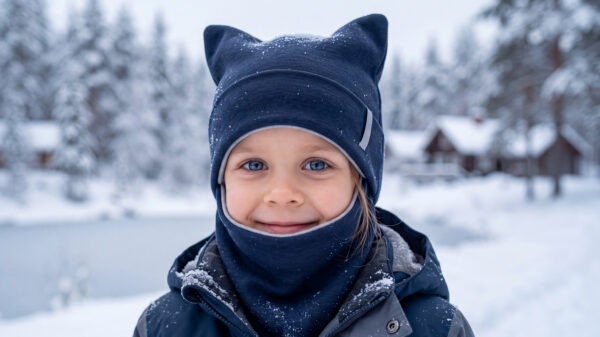
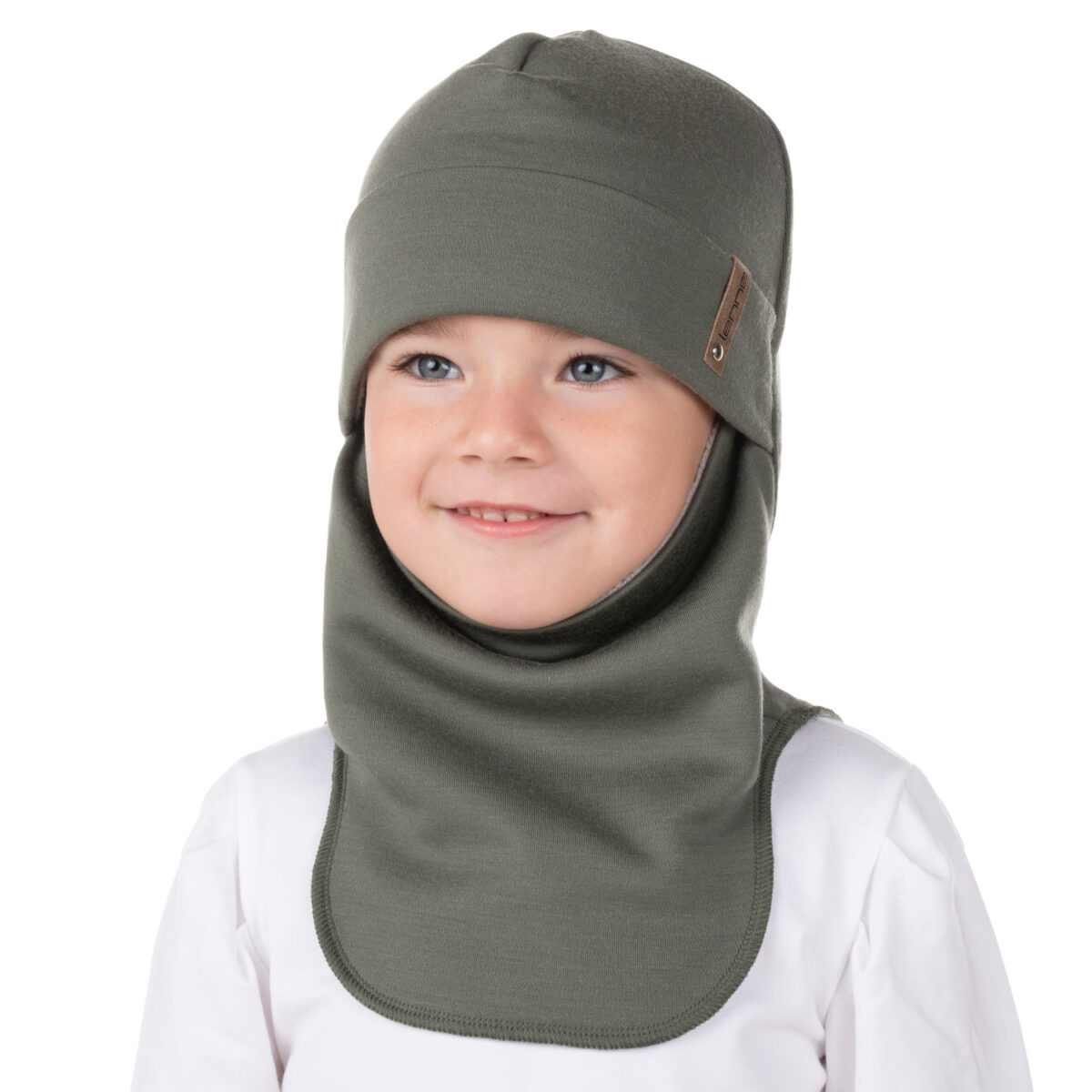
A regular winter hat protects the head and ears, but the neck needs separate protection. A balaclava covers the head, ears, neck, and a large part of the cheeks in one cut.
In cold and windy weather, the collar can be raised higher in front of the face. In calmer weather, it can be worn under the chin.
This makes the balaclava especially practical for kindergarten, sledding, playing outdoors, or being in a stroller, as a separate scarf is not always needed.
In addition, a well-fitting balaclava helps reduce situations where the hat moves out of place during play or where the neck is left bare between the jacket and the hat.
At what temperature should a warm merino balaclava be worn?
Lenne’s warmest merino balaclavas are suitable for winter wear when the perceived temperature is approximately –25…0 °C.
However, this does not mean that the same balaclava is suitable for every child at exactly the same temperature.
It is important to consider three things:
Air temperature
This is the temperature visible on the thermometer.
Perceived temperature or wind chill
Wind can make the weather feel significantly colder than the air temperature itself.
For example, –8 °C in calm weather and –8 °C with strong winds can be completely different conditions for a child.
Child’s activity level
A child running and playing actively produces more body heat than a child sitting in a buggy or sleeping in a stroller.
Therefore, the same balaclava may be suitable for a very active child in colder weather, while for a child sitting quietly in a stroller, sufficient thermal insulation of the entire outfit is important.
What are the differences between Lenne’s warmest balaclavas?
The basic heat-retaining construction of Lenne’s warmest merino wool balaclavas is similar, but the models differ primarily in appearance and details.
Therefore, you don’t have to choose only based on which one seems “warmest.” Rather, it’s worth looking at which design and practical features suit the child best.
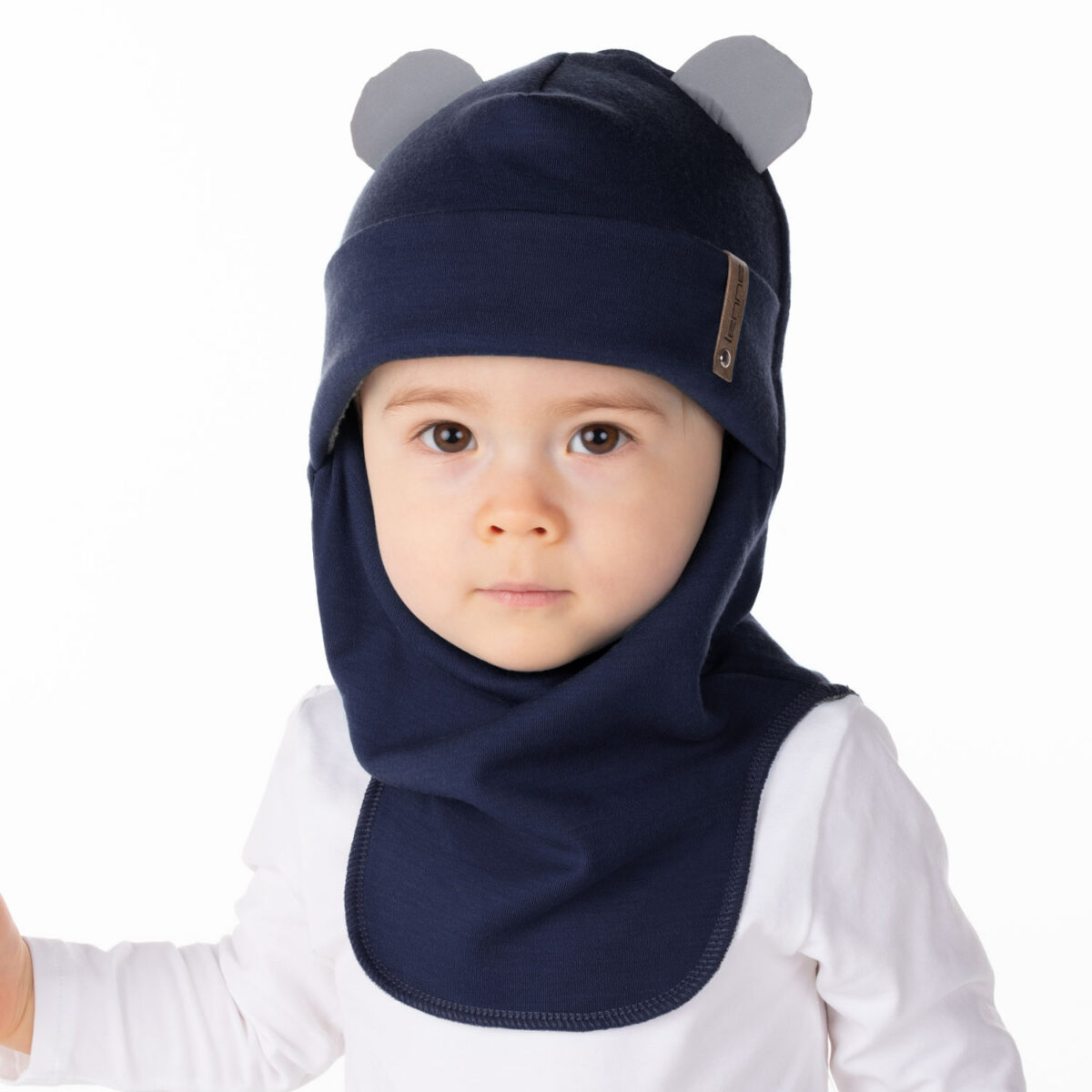
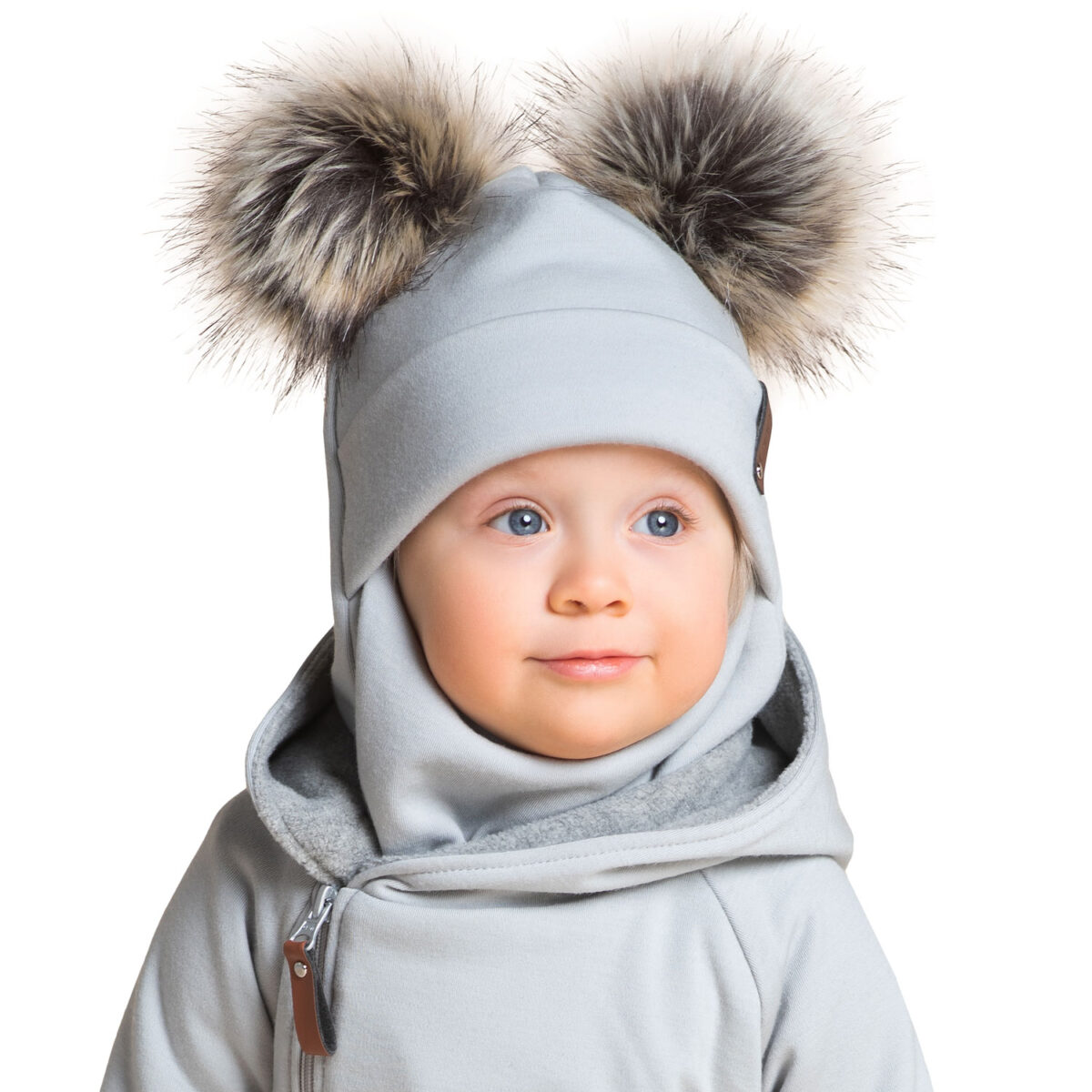
Extra warm merino wool balaclava with reflective ears
The hat is made of Lenne’s 300 g/m² merino fabric, with a soft cotton fleece lining inside, and a wide folded merino wool brim provides an additional warm layer for the forehead. The cut provides good coverage for the head, ears, cheeks, and neck.
The reflective ears are soft, so the balaclava can be comfortably worn under a hood or helmet.
The warm merino wool construction and soft cotton fleece lining help keep the child’s head, ears, cheeks, and neck protected from the cold. The collar can be raised higher in front of the face if necessary.
An ideal choice if you want a practical and warm balaclava, but the child likes a look that stands out a bit from the ordinary.
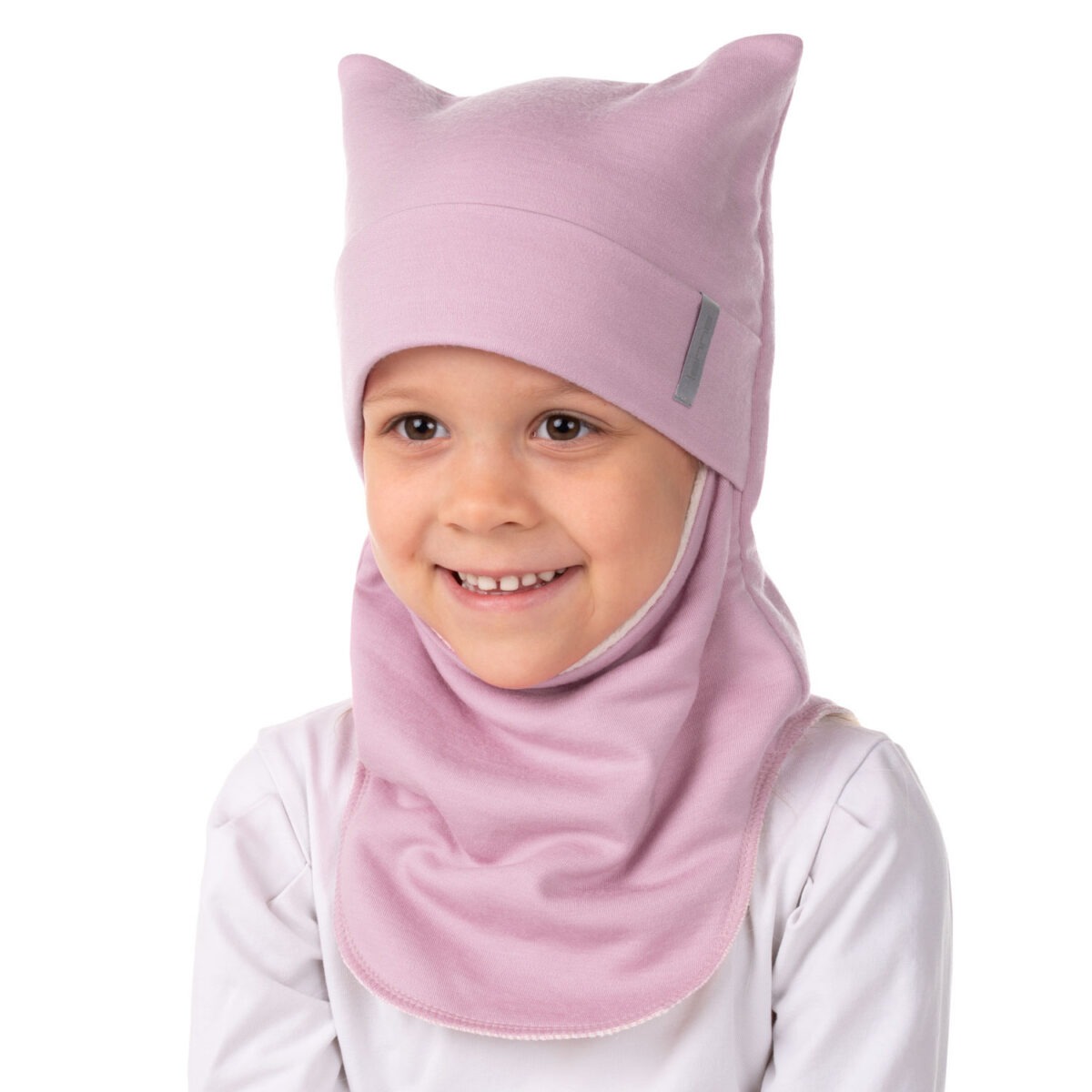
For this model as well, warmth is provided by Lenne’s merino fabric, cotton fleece lining, and an additional merino layer for the forehead. The collar can be worn under the chin or pulled higher in front of the face in cold and windy weather.
The seamless back makes the hat comfortable even for a child sitting or sleeping in a stroller in winter. The recommended temperature range based on perceived temperature is approximately –25…0 °C.
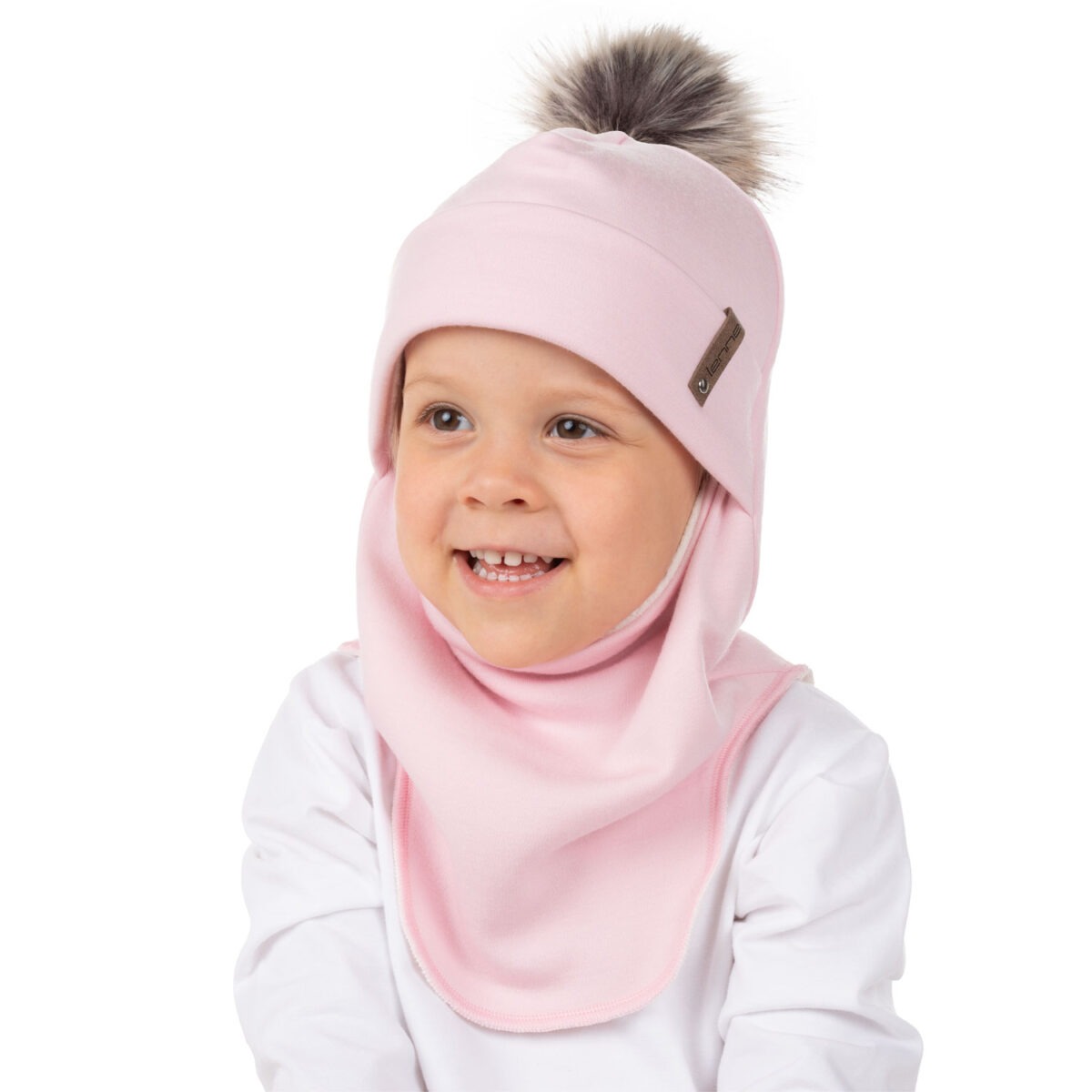
The heat-retaining construction follows the same principle: 300 g/m² merino, soft cotton fleece, and an extra forehead layer. The longer cut provides good coverage for the ears, cheeks, and neck.
The back of this model is also seamless in the middle, making it comfortable for wearing in a stroller, for example.
The hat is also made of Lenne’s 300 g/m² merino fabric and features a soft cotton fleece lining inside. If necessary, the collar can be pulled higher in front of the face in cold and windy weather.
The seamless back makes the hat comfortable for wearing in a stroller, and the smooth, well-fitting cut is ideal for wearing under a hood or helmet.
Which warm balaclava to choose for your child?
If you are looking for the warmest possible balaclava for cold winter weather for your child, it is worth looking primarily at versions that combine 300 g/m² merino fabric, a soft cotton fleece lining, and a well-covering cut.
The choice then depends primarily on appearance and usage situation:
The merino wool balaclava with reflective ears is suitable if you want a playful design and better visibility in the dark. Soft reflective ears add safety, and the hat is comfortable to wear under a hood or helmet.
For the coldest weather, don’t just look for a “thick hat.” It’s important to look at the whole picture: the thickness of the merino fabric, the lining, additional layers, face and neck coverage, and the child’s activity level.
Is a warm balaclava enough at –20 °C?
No. A very warm balaclava helps protect the head, ears, cheeks, and neck, but at –20 °C, you must look at the child’s entire outfit as a whole.
The most important thing is to consider the perceived temperature. If the air temperature is –20 °C or there is a strong wind, the weather can feel much colder. In such cases, the child needs a sufficiently warm snowsuit or jacket, suitable base layers, warm gloves, and footwear. All these parts are important for keeping the child warm.
The child’s activity level is also important. A child playing actively outdoors produces more heat themselves, while a child sitting in a buggy or stroller moves little and cools down faster. Therefore, a child sitting quietly may need more layers at the same temperature than a child who is running or climbing.
In cold weather, it’s also worth ensuring that clothes are not too tight. Layers that are too tight around the body can reduce the air layer that helps retain heat.
A good principle is to dress your child in layers: a breathable base layer, a heat-retaining mid-layer, and a weather-protective outer layer. Merino wool is well-suited as a base or mid-layer in cold weather because it helps retain heat and wicks moisture away from the body.
When a child goes outside in –20 °C weather, you shouldn’t just ask “is the hat warm enough?”, but rather: does the entire outfit match the perceived temperature and the child’s activity level?






Kommentaarid